Deadly Waterfalls in the World: Breathtaking Beauty and Hidden Dangers 2026 Travel Guide
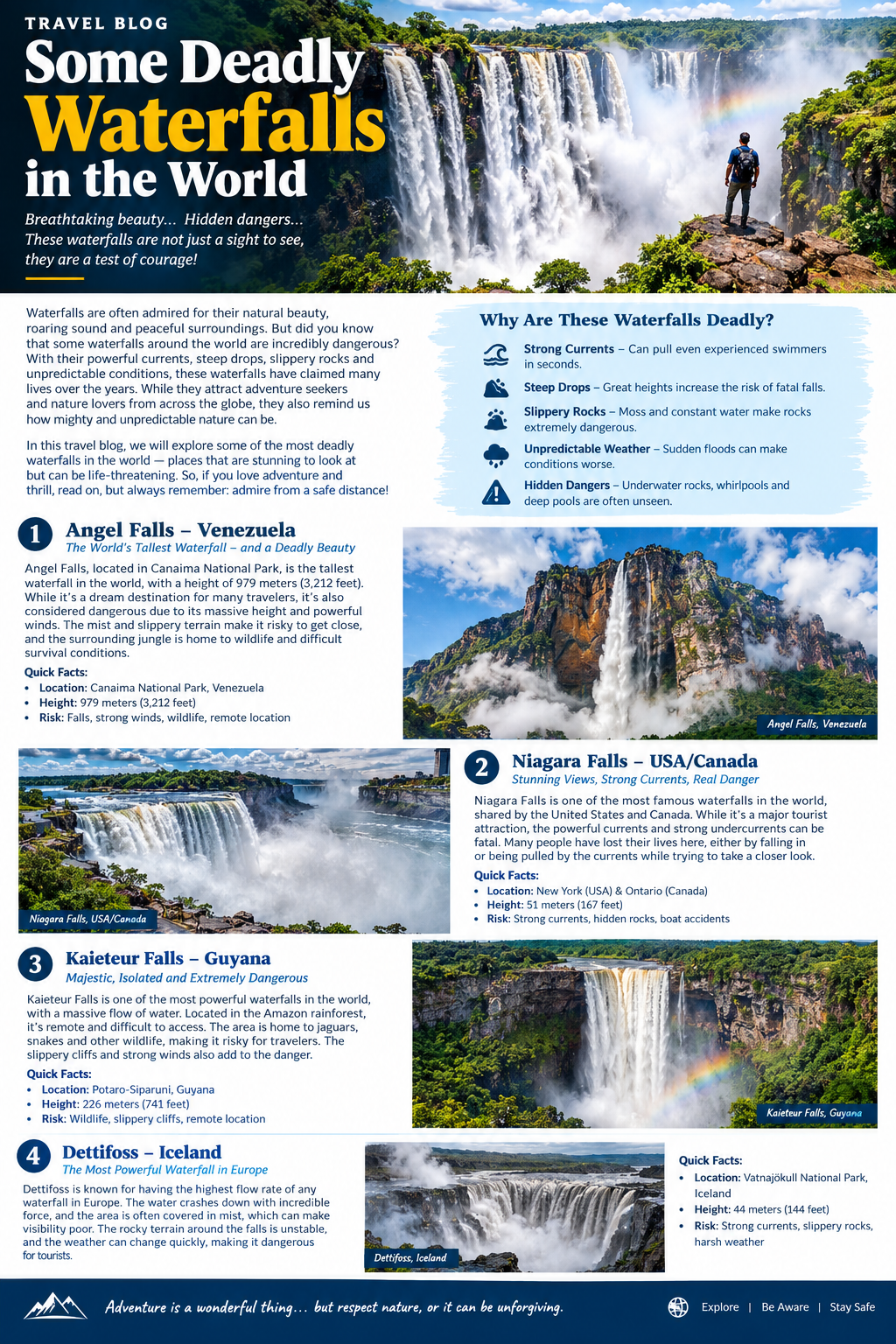
Some Deadly Waterfalls in the World: 10 Breathtaking Places Where Beauty Meets Danger
Waterfalls are among the most spectacular natural wonders on Earth. The thunder of falling water, the mist rising above deep valleys, rainbows appearing in the spray, and the lush green landscapes surrounding them make waterfalls unforgettable destinations for travellers. But behind this incredible beauty, some waterfalls hide serious dangers.
Powerful currents, slippery rocks, sudden floods, enormous drops, hidden underwater obstacles, and remote locations can turn an exciting adventure into a life-threatening situation.
In this travel guide, we will explore 10 of the world’s most dangerous waterfalls, discover where they are located, learn what makes them risky, and find out how travellers can experience their beauty more safely.


1. Angel Falls, Venezuela — The World’s Tallest Waterfall

LOCATION
Canaima National Park, Venezuela
HEIGHT
979 metres (3,212 feet)
Angel Falls, known locally as Salto Ángel, is one of the most extraordinary natural attractions in South America. It plunges from the summit of Auyán-tepui, a gigantic flat-topped mountain surrounded by the ancient landscapes of Venezuela’s Guiana Highlands.
The waterfall is famous for its astonishing height. Its water descends through the air in a long, dramatic cascade, with some of it turning into mist before reaching the ground below.
Why is Angel Falls dangerous?
The remote environment is one of its greatest challenges. Reaching the waterfall generally involves travel through Canaima National Park, often using a combination of flights, river journeys and guided excursions. Conditions can change with the season, and heavy rain can affect river levels and access.
The surrounding cliffs, wet rocks, dense rainforest and limited access to emergency assistance can make independent exploration particularly risky.
What can travellers do?
-
Take a guided excursion with a reputable local operator.
-
Enjoy scenic flights when available and conditions permit.
-
Explore the landscapes and waterways of Canaima National Park.
-
Follow the guide’s instructions and avoid approaching unstable cliff edges.
Best for: Adventure travellers, photographers and nature lovers who want to experience one of the planet’s most spectacular waterfalls.
2. Niagara Falls, USA and Canada — Powerful Water That Demands Respect

LOCATION
Ontario, Canada, and New York, USA
MAIN HAZARD
Extremely powerful currents
Niagara Falls is one of the most famous waterfall destinations in the world. Situated on the Niagara River between Canada and the United States, it consists of three major sections: Horseshoe Falls, American Falls and Bridal Veil Falls.
Millions of visitors are drawn to its spectacular views, boat excursions, observation points and illuminated nighttime scenery.
Despite its popularity as a tourist attraction, Niagara is a powerful natural system. Huge volumes of water move continuously over the falls, creating strong currents and dangerous turbulence.
Why is Niagara Falls dangerous?
The water upstream can move rapidly, and the edges of the falls are extremely hazardous. Slippery surfaces, powerful currents and submerged obstacles make entering restricted water areas potentially fatal. The force of the water below the falls also makes swimming unsafe.
Visitors should never cross protective barriers or attempt stunts near the edge.
Best experiences for tourists
-
View Horseshoe Falls from designated observation areas.
-
Join an authorised boat tour when operating.
-
Visit nearby parks and viewpoints.
-
Photograph the falls from official platforms and public trails.
Niagara demonstrates that a destination can be well developed for tourism and still present serious natural dangers.
Best for: Families, couples, photographers and first-time waterfall travellers who want dramatic scenery with established visitor facilities.
3. Kaieteur Falls, Guyana — A Remote Giant in the Rainforest

LOCATION
Kaieteur National Park, Guyana
HEIGHT
About 226 metres (741 feet)
Kaieteur Falls is one of South America’s most impressive natural attractions. Located on the Potaro River in Guyana, it plunges over a sandstone plateau into a deep rainforest gorge.
Unlike the heavily developed surroundings of some famous waterfalls, Kaieteur retains a remote and relatively wild atmosphere. Its enormous single drop, surrounded by tropical forest, gives the landscape a powerful and almost otherworldly appearance.
What makes Kaieteur Falls dangerous?
The combination of a high cliff edge, wet rock, powerful water and limited access to assistance creates significant risks. Rain can change conditions, while the surrounding forest is home to wildlife that visitors should observe from a safe distance.
The remote setting can also make rescue and medical assistance more difficult than at a major urban attraction.
Travel tips
-
Arrange transport and tours through established local operators.
-
Remain inside designated viewing areas.
-
Avoid walking toward unprotected cliff edges for photographs.
-
Carry drinking water, suitable footwear and rain protection.
The waterfall is also an important part of a wider rainforest ecosystem, making it an excellent destination for travellers interested in biodiversity and conservation.
Best for: Experienced adventure travellers, wildlife enthusiasts and visitors seeking a less commercialised natural wonder.
4. Dettifoss, Iceland — Europe’s Powerful Waterfall

Vatnajökull National Park, Iceland
HEIGHT
About 44 metres (144 feet)
Dettifoss is one of Iceland’s most powerful and dramatic waterfalls. Fed by the glacial Jökulsá á Fjöllum River, it sends enormous quantities of water into a rugged canyon in northeastern Iceland.
The waterfall is famous for its thunderous sound, grey glacial water and dark volcanic landscape. Mist rises from the gorge, and the surrounding terrain creates a striking contrast between ice-shaped rock and rushing water.
Why can Dettifoss be dangerous?
The main hazards include slippery rocks, powerful currents, unstable ground and poor visibility caused by spray. Iceland’s weather can change quickly, bringing cold temperatures, strong winds, rain or icy surfaces.
Conditions around access roads and walking paths can also vary seasonally.
What should you do?
Visit official viewpoints, check current access information and wear sturdy footwear. During colder months, icy paths may make the area significantly more difficult to navigate.
Best for: Landscape photographers, hikers and travellers exploring Iceland’s famous Ring Road region.
5. Victoria Falls, Zambia and Zimbabwe — The Smoke That Thunders

Zambia and Zimbabwe
HEIGHT
About 108 metres (354 feet) at its highest point
Victoria Falls, also known as Mosi-oa-Tunya, meaning “The Smoke That Thunders,” is one of Africa’s most spectacular natural landmarks. It lies on the Zambezi River, along the border between Zambia and Zimbabwe.
During periods of high water, the waterfall produces enormous clouds of spray that can be seen from far away. Rainbows often appear above the gorge, creating extraordinary photography opportunities.
Why is it dangerous?
The waterfall’s edges, narrow trails and wet rock surfaces can be hazardous. Water levels change throughout the year, affecting visibility, spray intensity and access to particular viewpoints.
During the dry season, some guided experiences may offer access to specific natural pools near the edge on the Zambian side. However, these activities are highly dependent on river conditions and are not suitable at all times.
Things to experience
-
Walk along official viewpoints in the national parks.
-
Take a guided helicopter or scenic flight.
-
Explore the surrounding rainforest and wildlife areas.
-
Learn about the Zambezi River and local conservation efforts.
Safety tip: Never enter the river or attempt to reach the edge independently. Only consider specialist activities when officially permitted and operated by qualified guides.
Best for: Adventure lovers, honeymooners and travellers exploring southern Africa.
6. Yosemite Falls, United States — A Mountain Waterfall with Hidden Risks

LOCATION
Yosemite National Park, California, USA
TOTAL HEIGHT
About 739 metres (2,425 feet)
Yosemite Falls is among North America’s tallest waterfalls and a major highlight of Yosemite National Park. Surrounded by towering granite cliffs, forests and dramatic mountain scenery, it is especially impressive during spring when snowmelt feeds the watercourse.
The falls consist of three main sections: Upper Yosemite Fall, the Middle Cascades and Lower Yosemite Fall.
What makes it dangerous?
The trails leading toward higher viewpoints can be steep and strenuous. Wet granite, loose stones, sudden weather changes and exposed cliff edges all increase the risk of injury.
The danger is not limited to the waterfall itself. Visitors who underestimate the hiking distance or run out of water may struggle to return safely.
Travel advice
-
Choose a route suitable for your fitness level.
-
Carry water, snacks and weather-appropriate clothing.
-
Stay on marked trails and obey seasonal closures.
-
Avoid approaching the water at the top or climbing on wet rocks.
The lower viewing area offers a more accessible way to admire the waterfall without undertaking the strenuous upper trail.
Best for: Hikers, photographers and families looking for a range of outdoor experiences.
7. Iguazu Falls, Argentina and Brazil — A Maze of Rushing Water

Argentina and Brazil
MAIN HAZARD
Flooding and powerful currents
Iguazu Falls is one of the world’s great waterfall systems. Located on the Iguazu River along the border between Argentina and Brazil, it comprises hundreds of cascades spread across a broad subtropical landscape.
The most famous section is the Devil’s Throat, where enormous quantities of water plunge into a deep, mist-filled gorge. Walkways, viewing platforms and surrounding rainforest trails allow visitors to experience the falls from different angles.
Why is Iguazu Falls dangerous?
The river can become exceptionally powerful during periods of heavy rain. Rising water levels may close walkways or restrict access to certain sections of the national parks.
Even when paths are open, visitors must avoid crossing barriers or attempting to reach the water. Spray can make surfaces slippery, and the force of the river is far greater than it may appear from a viewing platform.
Best activities
-
Walk along designated trails and viewing platforms.
-
Explore the rainforest and look for native wildlife.
-
Take photographs from approved viewpoints.
-
Consider authorised boat excursions when conditions permit.
Best for: Wildlife lovers, photographers, couples and travellers who enjoy combining natural scenery with accessible walking trails.
8. Huka Falls, New Zealand — A Turquoise River with Incredible Force

Near Taupō, New Zealand
MAIN HAZARD
Fast-flowing water and rapids
Huka Falls is smaller than many giant waterfalls on this list, but its powerful flow makes it one of New Zealand’s most impressive river attractions. The Waikato River narrows dramatically before rushing through a confined channel and plunging over a short waterfall.
The bright turquoise water, white foam and surrounding greenery create a beautiful contrast, making the falls a favourite stop for visitors exploring the Taupō region.
What makes it dangerous?
The river moves with tremendous force through the narrow gorge. Entering the water or attempting to swim near the falls can be fatal. Strong currents and submerged hazards make the area unsuitable for casual water activities.
Things to do nearby
-
Enjoy the designated viewing platforms.
-
Walk along the official riverside tracks.
-
Take photographs of the turquoise water.
-
Explore the surrounding Taupō region.
Visitors should remain within public viewing areas and use only authorised operators for any river-based activities.
Best for: Families, road-trippers and travellers seeking a dramatic natural attraction without a long hike.
9. Kaaterskill Falls, United States — Beautiful Cascades in the Catskills
LOCATION
Catskill Mountains, New York, USA
TOTAL HEIGHT
About 79 metres (260 feet)
Kaaterskill Falls is a two-tier waterfall surrounded by forested mountains in New York State. Its scenic cascades, woodland trails and seasonal colours make it a popular destination for hikers and nature photographers.
In spring, snowmelt and rainfall can increase the volume of water. Autumn brings colourful foliage, while winter can transform the surrounding rocks into icy formations.
Why can it be dangerous?
The combination of steep terrain, slippery rock, ice and exposed ledges can be hazardous. Visitors who leave designated trails to reach a better photo angle may expose themselves to serious falls.
The terrain can become particularly difficult after rainfall or during winter.
How to visit safely
-
Use designated parking areas and official trails.
-
Check current trail conditions before departure.
-
Wear suitable hiking footwear.
-
Avoid climbing near the waterfall’s edge or walking on icy rocks.
Best for: Hikers, autumn travellers and photographers looking for a picturesque waterfall in the northeastern United States.
10. Kegon Falls, Japan — A Dramatic Drop into a Mountain Gorge

Nikkō, Tochigi Prefecture, Japan
HEIGHT
About 97 metres (318 feet)
Kegon Falls is one of Japan’s best-known waterfalls. It drains Lake Chūzenji and plunges from a high rocky ledge into a deep valley in the mountains near Nikkō.
The scenery changes beautifully throughout the year. Autumn brings colourful maple leaves, summer offers lush green forests, and winter can create spectacular frozen formations around the waterfall.
What makes it dangerous?
The steep drop and surrounding cliffs make unprotected areas unsafe. Mountain weather can change quickly, while ice and snow can create additional hazards during winter.
Visitors should use the designated viewing facilities rather than attempting to reach the base or climb along the surrounding cliffs.
Travel tips
-
Visit the official viewing areas.
-
Check seasonal weather and operating conditions.
-
Wear warm clothing in winter.
-
Combine the waterfall with other attractions in Nikkō National Park.
Best for: Cultural travellers, photographers and anyone interested in Japan’s mountain scenery.
Quick Comparison: 10 Dangerous Waterfalls Around the World
| Waterfall | Country | Main danger |
|---|---|---|
| Angel Falls | Venezuela | Remote terrain, cliffs and weather |
| Niagara Falls | USA/Canada | Powerful currents |
| Kaieteur Falls | Guyana | Exposed cliffs and isolation |
| Dettifoss | Iceland | Slippery rocks and harsh weather |
| Victoria Falls | Zambia/Zimbabwe | Wet edges and changing river levels |
| Yosemite Falls | USA | Steep hiking trails and exposed rocks |
| Iguazu Falls | Argentina/Brazil | Flooding and strong currents |
| Huka Falls | New Zealand | Fast-flowing water |
| Kaaterskill Falls | USA | Steep trails and slippery rocks |
| Kegon Falls | Japan | High cliffs and winter ice |
Essential Safety Tips for Visiting Dangerous Waterfalls


-
Stay behind safety barriers. Barriers are designed to keep visitors away from dangerous edges and unstable ground.
-
Never swim in dangerous currents. Water can be much stronger than it appears, even near the riverbank.
-
Check the weather forecast. Heavy rain can cause sudden increases in water levels and dangerous flash flooding.
-
Wear suitable footwear. Hiking shoes with good grip help reduce the risk of slipping.
-
Follow official instructions. Respect closures, warning signs and guidance from park staff.
-
Avoid risky photographs. Never stand on unstable rocks or approach an exposed cliff edge for a selfie.
-
Use qualified local guides. This is especially important in remote areas with difficult terrain.
-
Carry basic essentials. Bring drinking water, a charged phone, appropriate clothing and a first-aid kit where suitable.
Remember that even experienced hikers and swimmers can underestimate the force of moving water.
Best Time to Visit Waterfalls
The ideal season varies by destination. Waterfalls fed by rainfall may be most dramatic during wet periods, while snowmelt can produce impressive flows in spring. However, these seasons can also bring higher risks.
-
Spring: Yosemite Falls and other snowmelt-fed waterfalls can be spectacular.
-
Summer: Many destinations offer longer daylight hours and easier access, although rainfall and river conditions still matter.
-
Autumn: Kegon Falls and Kaaterskill Falls are especially attractive for seasonal foliage.
-
Winter: Icelandic and Japanese waterfalls can look extraordinary, but ice and extreme cold increase hazards.
Always check official park alerts and access conditions before travelling.
Conclusion: Admire Nature, Respect Its Power
The world’s most dangerous waterfalls are also among its most breathtaking natural attractions. From the extraordinary height of Angel Falls to the enormous power of Niagara Falls, each destination offers a unique combination of beauty, adventure and natural force.
Kaieteur Falls reveals the wild character of Guyana’s rainforest, Dettifoss demonstrates Iceland’s rugged volcanic landscape, and Victoria Falls showcases the spectacular power of the Zambezi River. Meanwhile, Iguazu Falls, Yosemite Falls, Huka Falls, Kaaterskill Falls and Kegon Falls offer unforgettable experiences for travellers who appreciate nature.
These waterfalls remind us that nature does not always follow human expectations. The same water that creates beautiful landscapes can become dangerous when currents strengthen, rocks become slippery or weather conditions change.
The best travel experience is not about getting closest to danger. It is about discovering extraordinary places while protecting yourself and the natural environment.




1 thought on “Deadly Waterfalls in the World: Breathtaking Beauty and Hidden Dangers 2026 Travel Guide”