Green Anaconda: Amazing Facts About the World’s Heaviest Snake
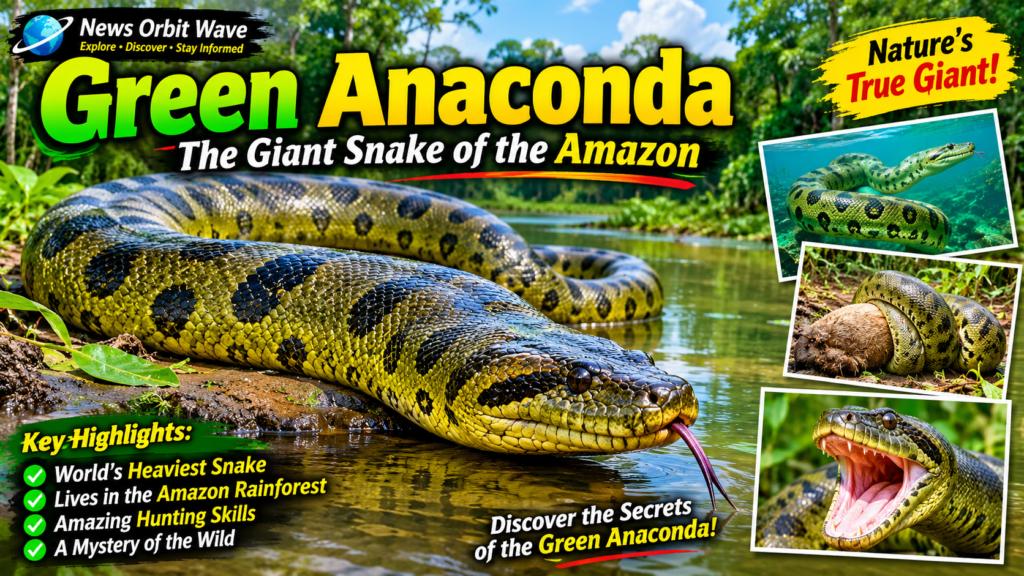
Green Anaconda: Discover the World’s Heaviest Snake and the Mysterious Giant of the Amazon Rainforest
Published by: News Orbit Wave
Meet the Incredible Green Anaconda
Deep inside the mysterious wetlands of South America lives one of the most powerful and fascinating reptiles on Earth — the Green Anaconda. Known for its enormous body, incredible strength, and remarkable hunting abilities, this giant snake has captured the imagination of wildlife lovers, researchers, and nature enthusiasts around the world.

The green anaconda is scientifically known as Eunectes murinus. It belongs to the boa family and is widely recognised as the heaviest snake species in the world. Although the reticulated python can grow longer, the green anaconda generally has a much heavier and thicker body.
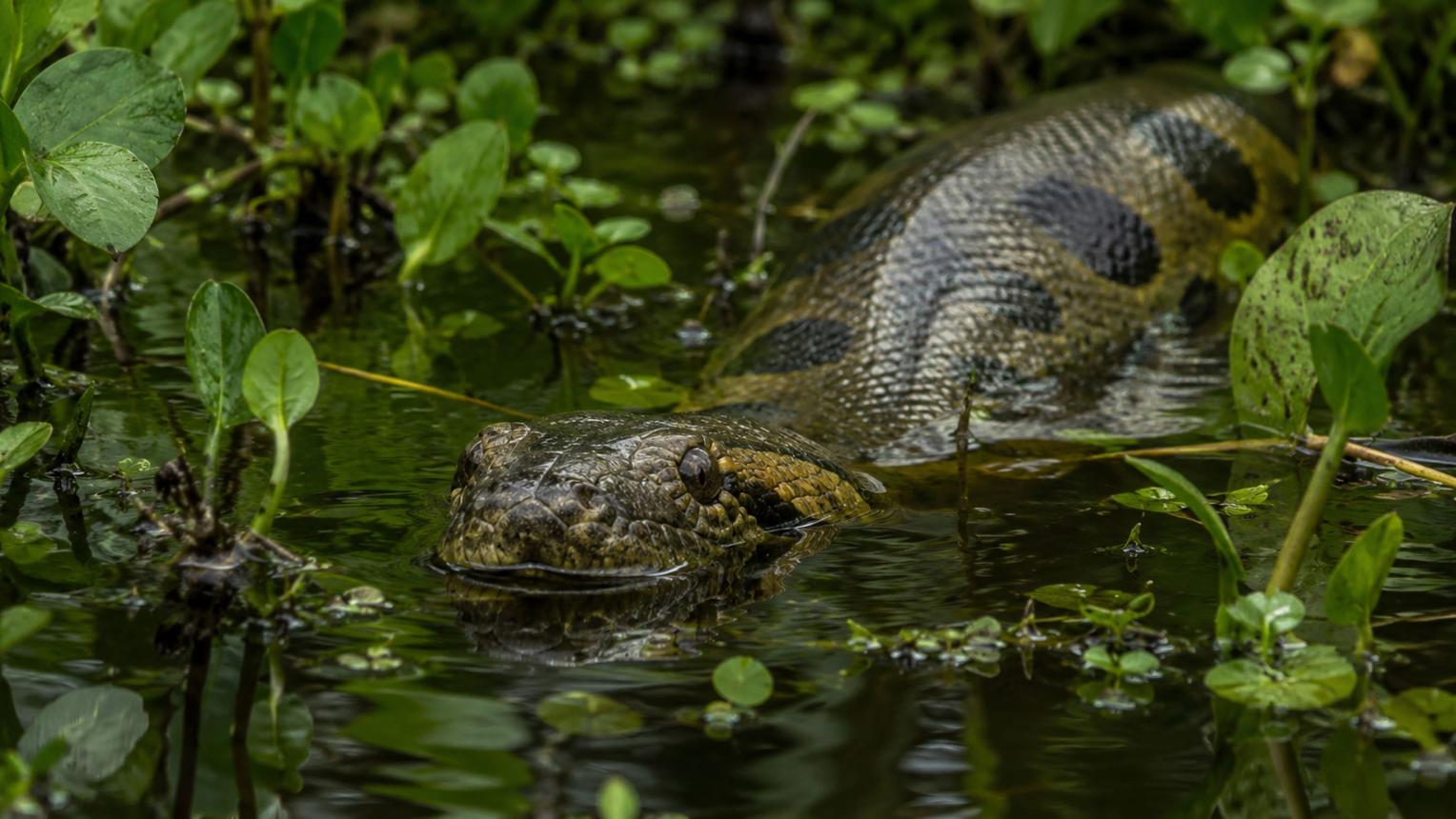
Imagine a powerful snake silently moving through dark green water, with only its eyes and nostrils visible above the surface. Surrounded by floating plants, dense forests, and mysterious wildlife, this incredible predator is perfectly designed for survival.
But how big can it really grow? What does it eat? How does it hunt? And why is this enormous snake so important to the Amazon ecosystem?
Let’s explore the amazing world of the green anaconda.
What Is a Green Anaconda?
The green anaconda is a large, non-venomous constrictor snake native to tropical South America. It is particularly associated with the Amazon Basin and other river systems, swamps, marshes, and seasonally flooded wetlands.
Unlike venomous snakes, green anacondas do not use poison to kill their prey. Instead, they rely on their muscular bodies to capture and constrict animals.
Their scientific name, Eunectes murinus, is associated with a group of aquatic boas that are exceptionally well adapted to life around water.
Green anacondas are generally solitary animals. They spend much of their lives in or near water, where their heavy bodies can move more efficiently than on dry land.
Their impressive size, camouflage, and hunting abilities make them one of the most remarkable predators of South American wetlands.
Physical Appearance: A Giant Built for Survival
The green anaconda has a thick, muscular body covered with olive-green or greenish-brown scales. Its body features distinctive dark oval spots along the back and smaller yellowish markings along the sides.
These patterns help the snake blend into muddy water, aquatic vegetation, and the shadows of tropical wetlands.
Body Size and Weight
Adult green anacondas commonly reach several metres in length. Large females are generally much bigger than males.
Females may reach approximately 5 metres or more, while exceptional individuals can be considerably larger. However, reliable measurements of extremely large wild anacondas are rare, and many popular size claims are exaggerated.
Adult females can weigh over 100 kilograms, although weight varies significantly depending on age, sex, health, and feeding condition.
Powerful Muscles
One of the most extraordinary features of the green anaconda is its muscular body. Its strong muscles help it capture and hold struggling prey.
Eyes and Nostrils
Its eyes and nostrils are positioned high on its head. This special arrangement allows the snake to remain almost completely submerged while observing its surroundings and breathing.
Where Does the Green Anaconda Live?
The green anaconda is native to tropical South America.
Its distribution includes countries and regions such as:
- Brazil
- Venezuela
- Colombia
- Peru
- Ecuador
- Bolivia
- Guyana
- French Guiana
- Paraguay
The snake prefers environments containing plenty of freshwater and vegetation.
Its favorite habitats include:
Amazon River Basin: The Amazon region provides extensive waterways, flooded forests, and abundant wildlife.
Swamps and Marshes: Shallow wetlands provide excellent opportunities for hiding, resting, and hunting.
Slow-Moving Rivers: Quiet waterways allow the anaconda to move without using too much energy.
Flooded Grasslands: Seasonal flooding creates temporary habitats where fish, birds, and mammals become accessible.
Water is extremely important to the green anaconda. Its heavy body is better supported in water, allowing it to move with impressive flexibility.
Why Is the Green Anaconda Such an Excellent Swimmer?
The green anaconda is one of nature’s most impressive aquatic snakes.
Its long, muscular body moves through water using powerful sideways waves. Its flattened body shape and strong muscles help it swim efficiently.
Unlike many animals that must remain completely above water, an anaconda can spend extended periods submerged.
Only its eyes and nostrils may remain visible when it waits near the surface.
This behaviour provides two major advantages.
First, it helps the snake remain hidden from potential prey.
Second, it allows the anaconda to approach animals drinking or moving near the water without attracting unnecessary attention.
Its ability to swim, hide, and strike makes it a highly successful predator in wetland environments.
What Does a Green Anaconda Eat?
The green anaconda is a carnivorous predator with a varied diet.
Its food depends on the availability of animals in its habitat and the size of the individual snake.
Its prey may include:
- Fish
- Frogs
- Water birds
- Rodents
- Capybaras
- Caimans
- Other small and medium-sized mammals
- Occasionally deer and other suitable animals
Larger anacondas can capture considerably bigger prey than younger individuals.
The snake uses its strong jaws and backward-curving teeth to grip an animal. It then coils its muscular body around the prey and constricts it.
After the prey dies, the anaconda swallows it whole.
Its flexible jaw structure and expandable skin allow it to consume animals much wider than its own head.
After eating a large meal, an anaconda may rest for an extended period while digestion takes place.
Hunting Strategy: A Master of Ambush
The green anaconda does not usually chase its prey over long distances.
Instead, it depends on patience, camouflage, and surprise.
Its greenish colour and dark markings help it disappear among aquatic plants and muddy surroundings.
A typical hunting sequence involves several stages:
Step 1: Finding a Suitable Location
The snake chooses a location where animals regularly visit, such as a riverbank or shallow wetland.
Step 2: Remaining Hidden
It stays almost completely underwater, keeping its eyes and nostrils near the surface.
Step 3: The Sudden Attack
When suitable prey comes within reach, the anaconda launches a rapid strike and uses its teeth to secure a grip.
Step 4: Constriction
It wraps its powerful body around the animal and applies pressure until the prey can no longer survive.
Step 5: Swallowing the Meal
The snake swallows the prey whole, usually beginning with the head.
This remarkable hunting method demonstrates how an animal can become highly specialised for its environment.
Reproduction: How Do Green Anacondas Have Babies?
Green anacondas have a fascinating reproductive system.
They reproduce through internal fertilisation and are ovoviviparous, meaning that embryos develop inside eggs retained within the mother’s body, and the female gives birth to live young.
The breeding season generally occurs during the warmer or wetter periods, depending on the local climate.
One particularly interesting behaviour is the formation of breeding aggregations.
During this period, several males may gather around one female, creating what is commonly called a breeding ball.
Multiple males may compete for the opportunity to mate.
After a gestation period that can last several months, the female gives birth to live baby anacondas.
A female may produce approximately 20 to 40 young, although larger litters have been recorded.
Newborn anacondas are independent from birth. They must immediately begin surviving in a dangerous environment filled with predators.
Amazing Facts About the Green Anaconda
The green anaconda is full of surprising biological features.
Here are some fascinating facts:
1. World’s Heaviest Snake
The green anaconda is generally considered the heaviest living snake species.
2. Females Are Larger
Female green anacondas are usually significantly larger and heavier than males.
3. Excellent Underwater Hunter
Its eyes and nostrils are positioned on top of its head, making underwater ambush hunting easier.
4. Non-Venomous Predator
It does not depend on venom. Its powerful muscles and constriction technique are its main hunting tools.
5. Can Swallow Large Meals
Its flexible jaws and expandable body allow it to consume prey much larger than its head.
6. Live Birth
Unlike many reptiles, green anacondas give birth to live young.
7. Exceptional Camouflage
Its green colour and dark markings provide excellent camouflage among aquatic plants.
8. Important Wetland Predator
It helps regulate populations of different animals within its ecosystem.
Green Anaconda vs Reticulated Python: What Is the Difference?
Both the green anaconda and reticulated python are famous for their enormous size. However, they have some important differences.
| Feature | Green Anaconda | Reticulated Python |
|---|---|---|
| Scientific name | Eunectes murinus | Malayopython reticulatus |
| Native region | South America | South and Southeast Asia |
| Weight | Generally heavier | Generally lighter |
| Length | Several metres | Can exceed 6 metres |
| Habitat | Wetlands and rivers | Forests and varied habitats |
| Hunting method | Constriction | Constriction |
| Venom | Non-venomous | Non-venomous |
The green anaconda is famous for its massive body and weight, while the reticulated python is recognised for its extraordinary length.
Both are impressive examples of evolutionary adaptation.
Natural Predators and Threats
Despite its enormous size, the green anaconda is not completely free from danger.
Young anacondas are especially vulnerable to predators.
Potential threats include:
- Large caimans
- Jaguars
- Large birds of prey
- Other predators in their habitat
- Human activities
Adult anacondas have fewer natural predators because of their size and strength.
However, human activities can create serious challenges.
Habitat Destruction
Deforestation, agricultural expansion, and wetland drainage can reduce the natural habitats available to anacondas.
Pollution
Chemical pollution, waste, and contaminated waterways can damage aquatic ecosystems.
Illegal Wildlife Trade
Some anacondas are captured for their skins or sold through wildlife markets.
Human-Wildlife Conflict
People sometimes kill anacondas because they fear their size or believe they threaten livestock and pets.
Protecting their natural habitat is essential for maintaining healthy wild populations.
Conservation: Why Should We Protect the Green Anaconda?
The green anaconda is an important part of South America’s freshwater ecosystems.
As a large predator, it helps regulate populations of prey animals and contributes to the natural balance of wetlands.
Its conservation is closely connected to the protection of rivers, forests, marshes, and other freshwater habitats.
Protecting the green anaconda requires several important actions:
- Preserving natural wetlands and river systems.
- Preventing illegal wildlife hunting and trade.
- Supporting scientific research and wildlife monitoring.
- Reducing water pollution.
- Educating local communities about the ecological importance of snakes.
- Protecting the Amazon rainforest and other South American ecosystems.
The green anaconda is not simply a giant snake. It is an important component of a complex natural environment.
Is the Green Anaconda Dangerous to Humans?
The green anaconda is a powerful wild animal, and its size means that it should always be treated with respect.
However, these snakes do not normally hunt humans as their preferred prey.
Most encounters occur in or around their natural habitats, where anacondas generally prefer to remain hidden or escape.
A threatened or cornered anaconda may defend itself by biting or constricting.
People exploring wetlands should maintain a safe distance and never attempt to touch, capture, or handle a wild anaconda.
It is also important to avoid disturbing snakes during breeding, feeding, or resting.
Respecting wildlife is the safest approach for both humans and animals.
The Green Anaconda and Its Importance to the Amazon Rainforest
The Amazon rainforest is one of the most biologically diverse places on Earth.
Its rivers and wetlands support thousands of species, including fish, amphibians, reptiles, birds, and mammals.
The green anaconda is one of the most recognisable predators of this environment.
By hunting different prey species, it contributes to natural population regulation.
Its existence also highlights the importance of maintaining healthy freshwater ecosystems.
When wetlands disappear, the effects can extend far beyond one species. Fish populations, birds, mammals, plants, and countless other organisms may also be affected.
This is why protecting the green anaconda’s habitat is part of a much larger environmental responsibility.
Myths and Misunderstandings About Green Anacondas
Stories about giant snakes have existed for centuries.
Some popular stories describe anacondas as enormous monsters capable of swallowing almost any animal.
Although green anacondas are genuinely powerful, many sensational claims are unsupported.
Here are some common misunderstandings:
Myth 1: Every Green Anaconda Is Enormous
Reality: Most individuals are much smaller than the extraordinary sizes described in popular stories.
Myth 2: Anacondas Are Venomous
Reality: Green anacondas are non-venomous constrictors.
Myth 3: They Constantly Attack Humans
Reality: Humans are not their normal prey, and they generally avoid unnecessary confrontation.
Myth 4: They Can Swallow Animals of Any Size
Reality: Their feeding ability is impressive, but it is limited by their body structure and physical capacity.
Understanding the difference between scientific information and sensational storytelling helps people appreciate these animals more accurately.
The Future of the Green Anaconda
The future of the green anaconda depends heavily on the condition of South America’s freshwater habitats.
Climate change, deforestation, pollution, and human development can affect the wetlands that support this species.
Scientists continue to study anaconda behaviour, distribution, genetics, and ecology.
Research is particularly valuable because large aquatic snakes can be difficult to observe in the wild.
Protecting these animals requires cooperation between researchers, conservation organisations, governments, and local communities.
The survival of the green anaconda is connected to the health of the remarkable ecosystems it inhabits.
A True Giant of the Natural World
The green anaconda is much more than an enormous snake. It is an extraordinary example of nature’s ability to create powerful, specialised, and perfectly adapted predators.
From its muscular body and underwater hunting skills to its fascinating reproduction and ecological importance, almost every aspect of its life is remarkable.
Although its enormous size can make it appear frightening, the green anaconda plays an important role in maintaining the balance of South American wetlands.
As we continue exploring the mysteries of the Amazon, one lesson becomes clear: protecting wildlife means protecting the natural world that supports all living creatures.
The green anaconda deserves our curiosity, respect, and protection.
News Orbit Wave — Explore Nature, Discover Wildlife, and Stay Informed!


