China’s AI Bubble Bursts: $480 Billion Lost in Shocking Stock Market Crash
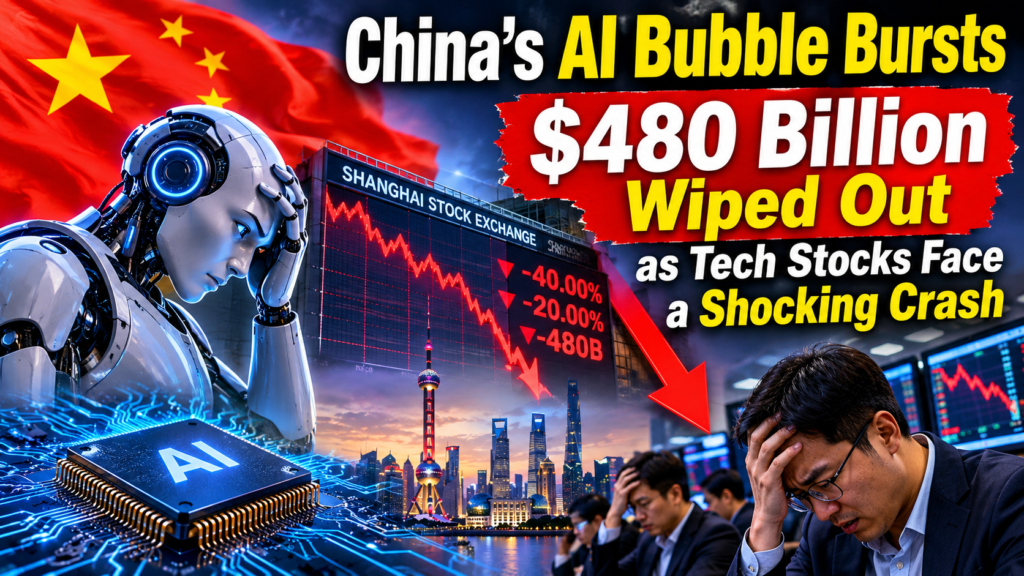
China’s AI Bubble Bursts: $480 Billion Wiped Out as Technology Stocks Face a Major Crash
Publisher: News Orbit Wave
Website: https://wnewswave.in/
Date: November 10, 2026
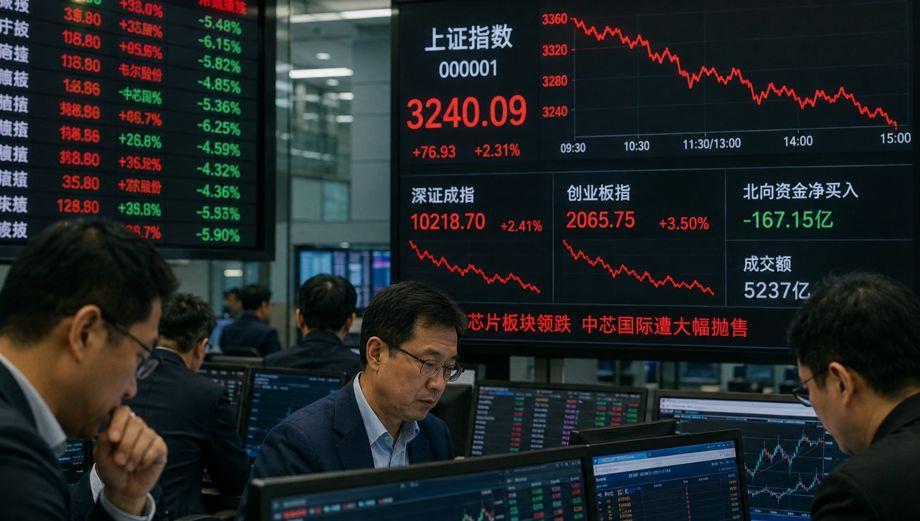
A Major Shock for China’s AI Industry
China’s artificial intelligence sector has experienced a dramatic change in investor confidence. After enjoying a powerful stock market rally, several Chinese AI, semiconductor, and robotics companies have seen their share prices fall sharply.
The estimated $480 billion loss in market value has become a warning sign for investors who believed that artificial intelligence companies would continue growing without interruption.
For several years, AI has been one of the most attractive investment themes worldwide. Companies developing advanced chips, robotics, cloud computing systems, and AI models attracted billions of dollars in investment. China became an important part of this global competition.
However, the recent correction demonstrates that technological progress and stock market performance are two different things. A company can develop impressive technology but still struggle to generate enough revenue to justify its valuation.
The central question is no longer simply how powerful China’s AI technology can become. Investors increasingly want to know how much money these businesses can actually earn.
What Happened to China’s AI Bubble Stock Market?
The Chinese technology market experienced a remarkable rally during the previous two years. Expectations surrounding artificial intelligence, government support for domestic technology and the development of semiconductor manufacturing encouraged investors to purchase technology shares.
Many investors believed that Chinese companies could become global leaders in AI hardware and software.
That optimism pushed several technology stocks to extraordinary valuations.
However, the situation changed during 2026. Investors began questioning whether company earnings could support such expensive share prices.
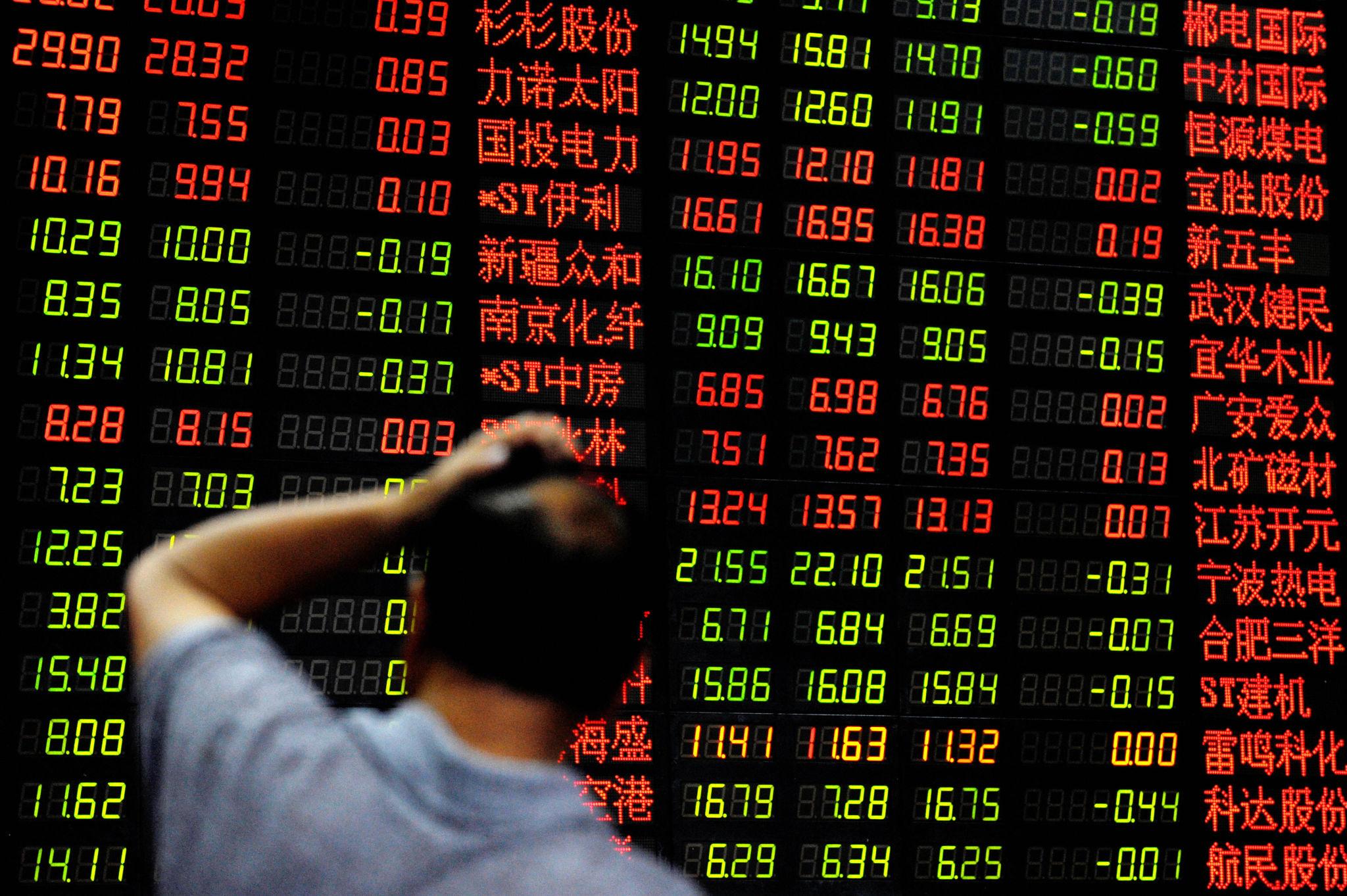
The STAR 50 index, which represents major technology and innovation companies listed in Shanghai, declined approximately 40% in less than four months, according to Reuters reporting.
This decline wiped out around $480 billion in market value.
The broader CSI 300 index also experienced pressure, falling approximately 20% from its June highs in the period covered by the report.
The correction affected semiconductor manufacturers, robotics businesses and suppliers of components used in AI data centres.
It is important to understand that $480 billion represents lost stock market valuation. It does not mean that $480 billion in cash physically disappeared from Chinese companies or that every affected business lost the same amount of money.
Why Did China’s AI Bubble Burst?
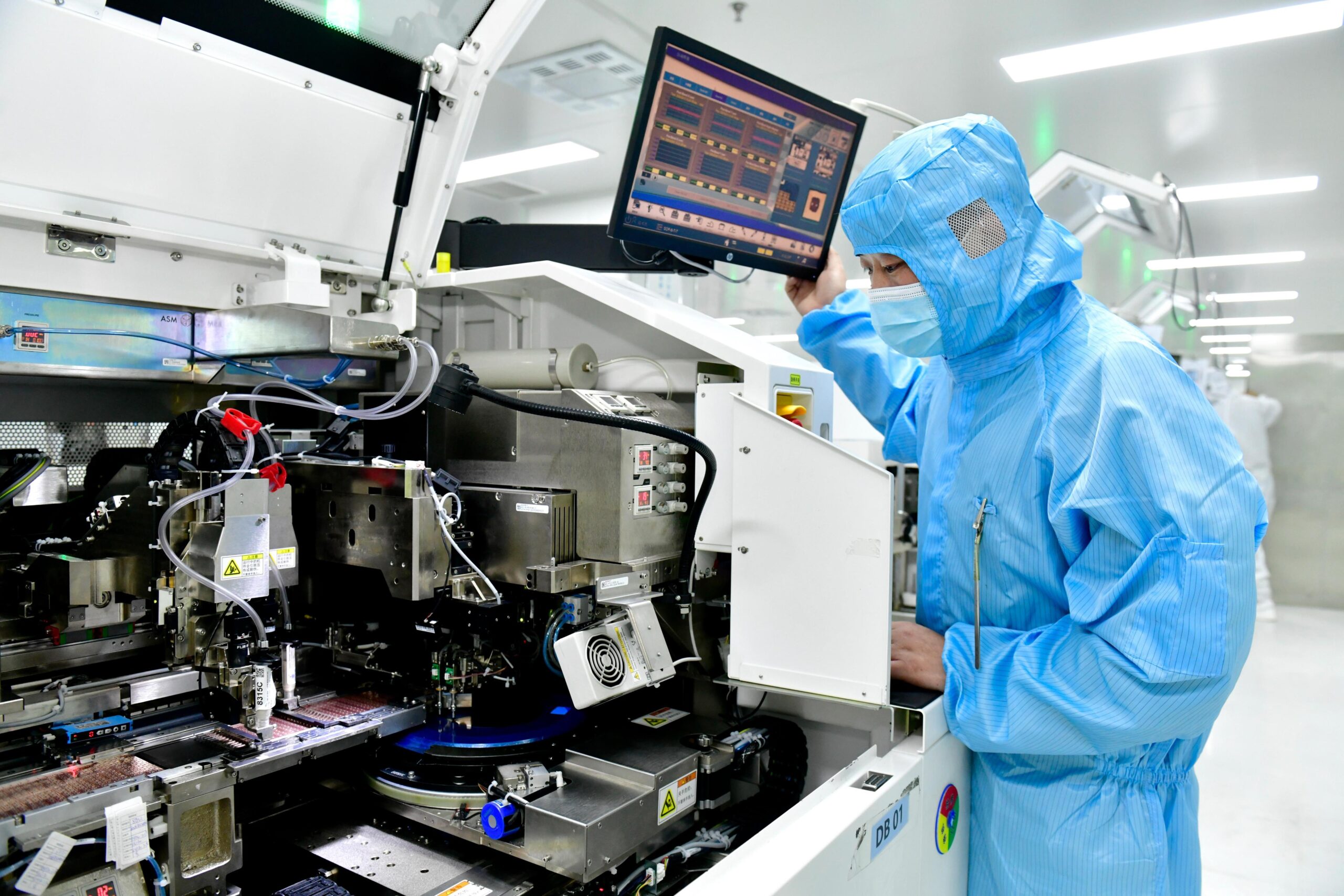
There is no single explanation for the market decline. Several economic, financial, and technological factors combined to weaken investor confidence.
A. Extremely High Stock Valuations
One of the biggest reasons behind the decline was excessive enthusiasm.
During the AI Bubble rally, investors purchased shares because they expected future growth. In some cases, stock prices increased much faster than company revenues and profits.
According to the Reuters report, the STAR 50’s price-to-earnings ratio had reached nearly 250 times trailing earnings at its peak. Even after the correction, it remained around 100 times.
For comparison, the Nasdaq 100 was trading at approximately 30 times trailing earnings in the comparison cited in the report.
This difference illustrates how expensive parts of China’s technology market had become.
When investors begin questioning future growth, highly valued companies can experience particularly sharp declines.
B. Questions About AI Demand
Artificial intelligence requires enormous computing resources.
Businesses need advanced processors, servers, networking equipment, electricity, cooling systems and data centres to operate large AI models.
Technology companies have invested heavily in these areas because they expect demand to grow.
However, building infrastructure does not automatically guarantee profits.
Companies must find customers willing to pay for their services. If demand grows more slowly than expected, businesses can struggle to recover their investment.
Investors are now examining whether China’s AI companies can turn their technological achievements into reliable commercial revenue.
C. US Export Restrictions and Geopolitical Pressure
International trade restrictions are another important concern.
China’s semiconductor industry has faced restrictions affecting access to certain advanced technologies and international markets.
There are also concerns about possible restrictions on Chinese suppliers selling equipment to US data centres.
Such measures could limit overseas business opportunities for companies that manufacture optical networking components and other AI infrastructure products.
For businesses expecting global customers, restrictions can create uncertainty about future revenue.
The result is that investors are becoming more careful about companies whose growth depends on international technology trade.
D. Competition and Potential Price Wars
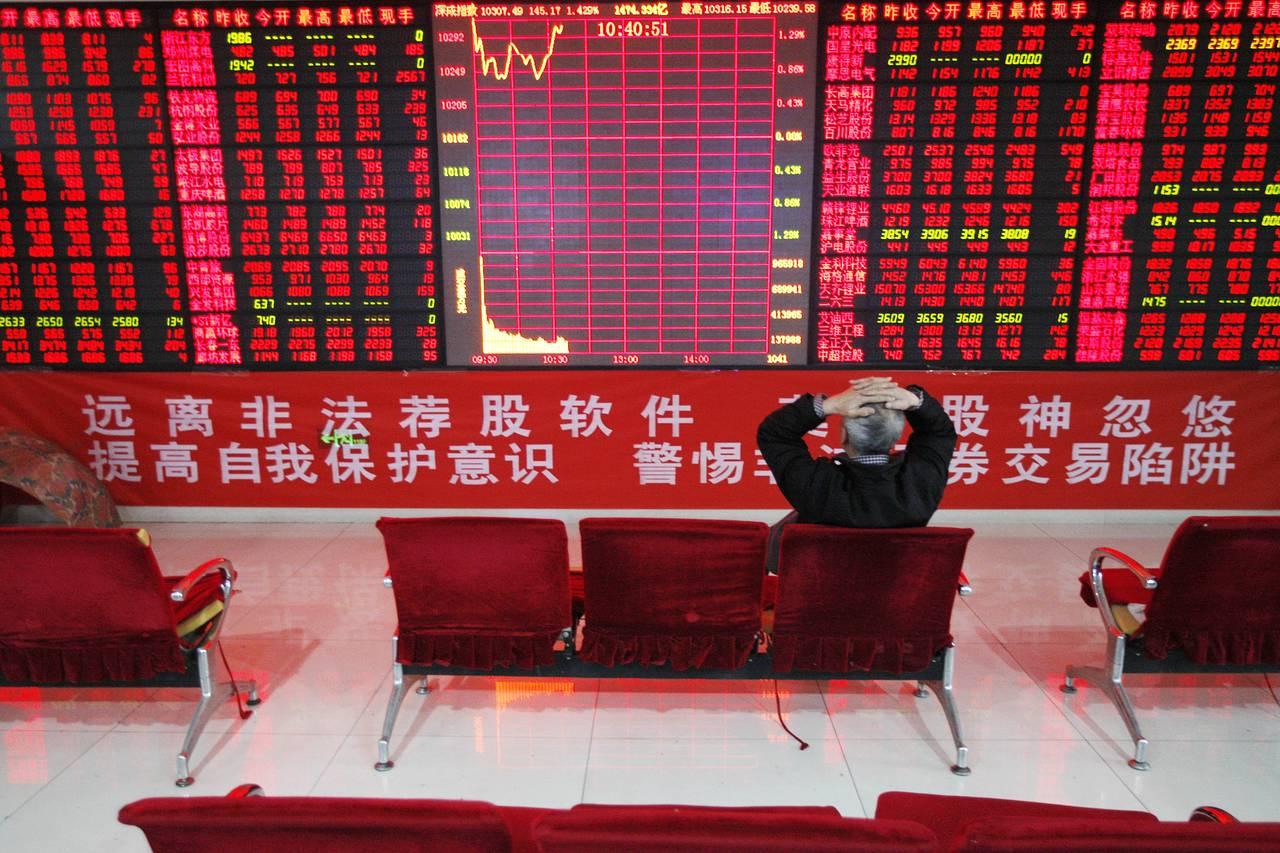
China has a large number of technology companies competing in artificial intelligence.
Competition can encourage innovation and reduce prices for consumers. However, it can also damage company profitability.
When several manufacturers offer similar products, they may reduce prices to attract customers.
This creates a difficult situation for businesses that have already invested heavily in research, factories, and equipment.
If prices fall faster than production costs, profit margins can become extremely small.
This is particularly important in semiconductor manufacturing, where research and production facilities require significant capital.
Which Chinese Technology Companies Have Been Affected?
The market correction has affected several well-known companies connected with artificial intelligence, semiconductor manufacturing and robotics.
Unitree Robotics
Unitree is one of China’s recognised robotics companies. Its products have attracted international attention because of developments in quadruped robots and humanoid robotics.
The company’s market debut attracted enormous retail investor interest.
Reuters reported that its listing was oversubscribed approximately 8,000 times by retail buyers. However, its shares subsequently lost around half their value after trading began in August.
The decline demonstrates how investor excitement surrounding robotics can turn into financial losses when expectations become too high.
CXMT
ChangXin Memory Technologies, commonly known as CXMT, is an important Chinese memory-chip manufacturer.
Memory chips are essential components in computers, servers, smartphones and AI infrastructure.
The company became part of China’s broader ambition to strengthen domestic semiconductor production.
However, its shares also came under pressure during the market correction, with Reuters reporting a decline of more than a quarter over the previous month at the time of its analysis.
MetaX Integrated Circuits
MetaX is involved in developing graphics processing and computing technologies.
GPUs are important for artificial intelligence because they can perform the large numbers of calculations required to train and operate AI models.
The company attracted considerable attention after its market debut.
However, its shares reportedly lost around half their value from their July levels during the correction.
Moore Threads Technology
Moore Threads is another Chinese technology company associated with GPU development.
The business attracted investors who believed domestic chip manufacturers could become stronger competitors in the global semiconductor industry.
Its shares experienced a substantial decline after previously recording a dramatic increase during their market debut.
These examples demonstrate that companies operating in strategically important industries are not automatically protected from market volatility.
The Role of Artificial Intelligence in China’s Economic Future
Despite the stock market decline, artificial intelligence remains an important part of China’s long-term economic strategy.
The country is investing in several areas, including:
- Advanced semiconductor manufacturing.
- AI-powered robotics.
- Autonomous driving systems.
- Industrial automation.
- Large language models.
- Cloud computing and data centres.
- AI applications in healthcare and education.
- Smart manufacturing and logistics.
Chinese technology companies are also developing AI models designed to compete internationally.
The industry has made progress in creating models that can perform language processing, generate images, write software and assist with business operations.
However, long-term success will depend on more than technological development.
Companies need sustainable business models, reliable customers and sufficient profit margins.
A powerful AI model may attract millions of users, but operating it can be expensive. Businesses must balance computing costs, research spending and customer pricing.
This is one of the major challenges facing the industry.
Why Are Investors Losing Confidence?
The biggest change is the way investors are evaluating technology companies.
Previously, many investors were willing to purchase AI stocks because they expected the industry to expand rapidly.
Now, the focus is shifting towards financial performance.
Investors are asking important questions:
- Is the company generating real revenue from artificial intelligence?
- Can it produce consistent profits?
- Does it have a competitive advantage?
- Can it survive a price war?
- Will international restrictions affect its customers?
- Are its shares reasonably valued?
These questions are important because artificial intelligence is still developing as a commercial industry.
Some companies may become highly profitable, while others may struggle to compete.
The correction is encouraging investors to distinguish between businesses with genuine commercial opportunities and companies whose share prices were driven mainly by market excitement.
What Does the $480 Billion Loss Mean for Ordinary Investors?
The market decline is particularly important for individual investors.
Many retail investors entered the AI market because they believed technology stocks offered opportunities for rapid returns.
When share prices increased dramatically, the possibility of making money attracted even more buyers.
However, investing in highly valued technology companies involves considerable risk.
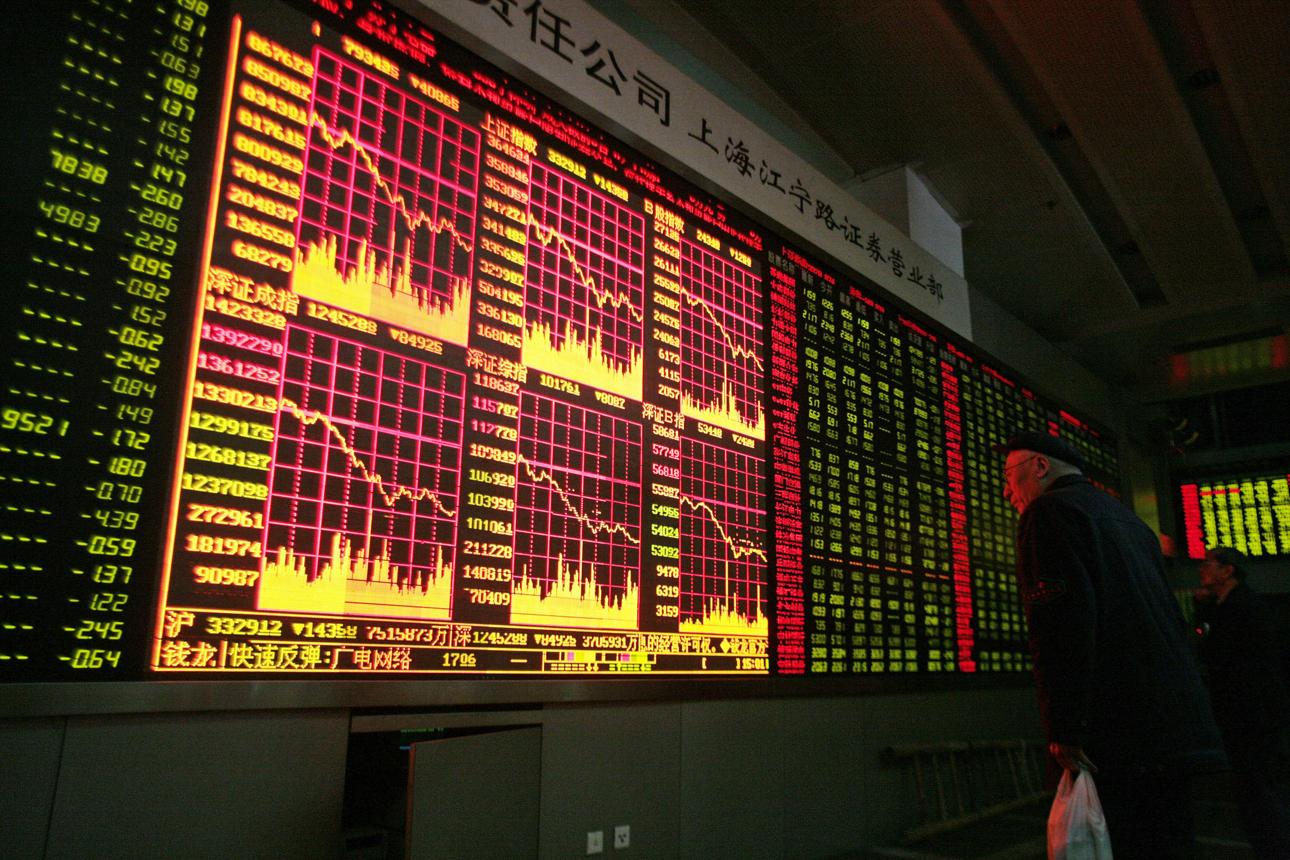
A sudden correction can reduce the value of an investment within a short period.
For example, someone purchasing shares near their market peak may face significant losses if the stock subsequently falls by 40% or 50%.
This does not mean that every AI company is a bad investment. It means investors should examine individual businesses instead of purchasing shares simply because they are associated with artificial intelligence.
Financial performance, debt levels, cash flow, competition and valuation all matter.
Investors should also avoid making decisions based entirely on headlines or social media predictions.
Could China’s AI Bubble Crisis Affect the Global Technology Industry?
China plays an important role in global technology supply chains.
Its companies manufacture electronic components, semiconductors, networking products and other equipment used in modern computing systems.
Therefore, a major correction in Chinese technology stocks deserves attention from international investors.
However, a decline in Chinese AI shares does not automatically mean that the global artificial intelligence industry is collapsing.
Different countries have different companies, investment conditions and market valuations.
The United States, South Korea, Japan and Taiwan also have important semiconductor and technology businesses.
The Chinese correction could nevertheless encourage investors worldwide to reconsider how much they are willing to pay for AI-related companies.
It may also increase scrutiny of technology businesses that are investing enormous amounts of money without clearly demonstrating how those investments will generate returns.
For the global industry, the important lesson is that AI development must eventually produce sustainable economic value.
Is China’s AI Bubble Completely Over?
AI Bubble is too early to declare the end of China’s artificial intelligence industry.
A stock market correction and the collapse of an entire technology sector are very different events.
The recent decline suggests that investor expectations had become excessive in certain parts of the market.
However, demand for AI computing, automation, robotics and advanced software has not disappeared simply because share prices have fallen.
Some businesses may use this period to strengthen their products, improve efficiency and develop more sustainable revenue models.
Others may struggle because of high operating costs, limited customers or intense competition.
The future will depend on whether companies can demonstrate genuine commercial success rather than relying on investor excitement.
Some analysts and investors may see opportunities in companies whose valuations have become more reasonable. Others may prefer to wait until earnings and market conditions become clearer.
Both approaches reflect the uncertainty surrounding the sector.
What Could Happen Next?
Several possible developments could shape China’s AI market in the coming months.
First, investors may demand stronger financial results. Companies will need to demonstrate that their AI Bubble products are generating meaningful revenue.
Second, competition could become more intense. Manufacturers may reduce prices to attract customers, placing pressure on profit margins.
Third, government technology policies will remain important. Support for domestic semiconductor production and artificial intelligence could influence the industry’s direction.
Fourth, international trade restrictions could affect business opportunities. Companies that depend on overseas markets may need to find alternative customers.
Finally, the market could become more selective. Businesses with strong technology, effective management and sustainable finances may perform differently from companies whose valuations depended mainly on speculation.
These are possibilities rather than guaranteed outcomes. The market’s direction will depend on earnings, economic conditions, policy decisions and investor confidence.
A Warning for the Global AI Investment Boom
Source-Routers
China’s $480 billion AI stock market decline is a significant reminder that even the most promising industries can experience financial bubbles.
Artificial intelligence has the potential to transform manufacturing, healthcare, education, transportation, finance and many other industries.
But technological progress does not guarantee that every company involved will become successful.
The Chinese market correction highlights the importance of realistic valuations, sustainable business models and actual financial performance.
For investors, the message is clear: understanding a company’s business is more important than following a popular technology trend.

For technology companies, the challenge is to move beyond impressive demonstrations and turn innovation into products that customers genuinely need and are willing to pay for.
China’s AI industry still has considerable potential. However, its next phase may be less about speculative excitement and more about real competition, commercial results and financial discipline.
The $480 billion correction may therefore become an important turning point in the global AI investment story.
The AI revolution is not necessarily over. But the era of assuming that every AI company will automatically become a winner may be coming to an end.
News Orbit Wave – Editorial Note
This article is an original editorial explanation based on publicly reported developments and market information. It is intended for news and educational purposes and does not constitute investment advice. Market values and company share prices can change.
Publisher: News Orbit Wave
Website: https://wnewswave.in/