James Handy’s Bold AI Prediction 2026 – Why the Memory Chip Industry Could Be Entering a Historic New Era

AI Boom Is Reshaping the Semiconductor Industry
Artificial intelligence is transforming industries across the globe, from healthcare and finance to education and entertainment. However, one of the biggest beneficiaries of the AI revolution is an industry that often remains behind the scenes—the memory chip market.

As demand for advanced AI systems continues to surge, renowned semiconductor analyst James Handy has emerged as one of the leading voices explaining how AI is changing the future of memory technology. His recent insights have sparked widespread discussion among investors, technology experts, and semiconductor companies worldwide.
According to Handy, the explosive growth of AI applications is creating unprecedented demand for advanced memory solutions, potentially leading to one of the most significant technology cycles in recent history.
Who Is James Handy?
James Handy, often known as Jim Handy, is a respected semiconductor industry analyst and the General Director of Objective Analysis, a technology research firm specializing in memory and storage markets.
With decades of experience in semiconductor technologies, Handy has built a reputation for accurately analyzing market trends, manufacturing developments, and emerging technologies. His opinions are frequently sought by technology companies, investors, and media organizations looking to understand the future direction of the chip industry.
Over the years, he has closely tracked developments in DRAM, NAND flash memory, solid-state storage, and advanced memory architectures that power modern computing systems.
Why AI Is Driving a Memory Revolution
Artificial Intelligence models require enormous amounts of data processing power. Whether it is ChatGPT, autonomous vehicles, advanced robotics, or enterprise AI systems, these technologies depend heavily on powerful processors and high-speed memory.
Traditional memory solutions are often insufficient for the demands of large AI models. This has led to growing demand for High Bandwidth Memory (HBM), a specialized memory technology designed to deliver significantly faster performance while reducing power consumption.
According to industry experts, HBM has become one of the most critical components in AI infrastructure. Companies developing advanced AI hardware now view memory performance as just as important as processor performance.
James Handy believes that this shift represents a fundamental change in the semiconductor landscape. Instead of memory being a supporting component, it is becoming a central factor in determining AI system performance.
The Rise of High Bandwidth Memory (HBM)
The rapid adoption of AI has dramatically increased demand for HBM chips. Major technology companies are investing billions of dollars into AI data centers that require advanced memory solutions capable of handling massive workloads.
Manufacturers such as Samsung, SK Hynix, and Micron are racing to expand production capacity as global demand continues to grow.
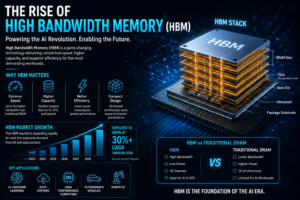
Industry analysts estimate that the HBM market could expand at an extraordinary pace throughout the coming years. AI servers require significantly more memory than traditional computing systems, creating a strong growth opportunity for semiconductor manufacturers.
This demand has also contributed to rising revenues and profits for memory producers, many of whom struggled during previous downturns in the semiconductor cycle.
A Warning Behind the Optimism
While Handy acknowledges the tremendous opportunities created by AI, he has also issued a cautionary message.
Historically, the memory chip industry has been highly cyclical. Periods of strong demand often encourage manufacturers to increase production capacity. If too much capacity enters the market at once, supply can exceed demand, resulting in falling prices and declining profits.
According to Handy, the current AI-driven boom is powerful, but investors should remember that technology markets rarely grow in a straight line forever.
If AI spending slows or manufacturers overestimate future demand, the industry could face another period of correction. Such cycles have occurred multiple times throughout semiconductor history.
This balanced perspective has attracted attention because it highlights both the enormous potential and the inherent risks associated with the current AI investment wave.
Nvidia’s Dominance and the Memory Bottleneck
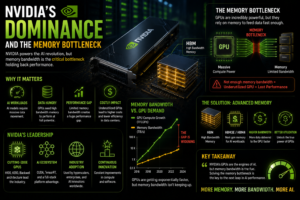
One of the key reasons memory has become such an important topic is the extraordinary success of Nvidia’s AI processors.
Nvidia’s graphics processing units (GPUs) are widely used for training and deploying advanced AI models. However, these GPUs rely heavily on high-performance memory to achieve maximum efficiency.
As AI workloads continue to grow, memory has emerged as one of the industry’s biggest bottlenecks. Even the most powerful processors cannot perform optimally without sufficient bandwidth and memory capacity.
This challenge has elevated memory manufacturers from secondary suppliers to strategic partners in the AI ecosystem.
Global Competition Intensifies
The race for AI leadership has intensified competition among semiconductor companies worldwide.
The United States, South Korea, Taiwan, China, and several European nations are investing heavily in semiconductor manufacturing and research. Governments recognize that advanced chips and memory technologies will play a crucial role in future economic growth and national competitiveness.
James Handy believes that memory technology will remain one of the most important battlegrounds in the global semiconductor race.
Companies capable of delivering faster, more efficient, and more reliable memory solutions will likely gain significant advantages as AI adoption expands.