Top 10 Best AI Tools in 2026 – Complete Guide for Productivity, Writing & Design
AI
Top 10 Best AI Tools in 2026: The Ultimate Guide for Productivity, Writing, Design & Coding


Artificial Intelligence (AI) has transformed the way people work, create, and solve problems. Whether you’re a blogger, student, entrepreneur, marketer, or software developer, AI tools can automate repetitive tasks, improve productivity, and unlock new creative possibilities.
In this guide, we’ll explore the top AI tools of 2026, their features, advantages, and the best use cases for each.
What Are Artificial Intelligence Tools?
AI tools are software applications powered by machine learning, natural language processing (NLP), and other artificial intelligence technologies. Usually faster, smarter, or more automatic than traditional software. Here’s a breakdown of the main categories:
Benefits of Artificial Intelligence Tools
- Save time
- Increase productivity
- Improve creativity
- Reduce manual work
- Generate high-quality content
- Automate repetitive tasks
- Enhance business efficiency
1. ChatGPT


ChatGPT is one of the world’s leading Artificial Intelligence assistants. It helps users write articles, answer questions, generate code, summarize documents, brainstorm ideas, and much more.
Features
- Content writing
- Coding assistance
- Email drafting
- Research support
- Translation
- Learning assistance
Best For
- Bloggers
- Students
- Developers
- Businesses
2. Google Gemini


Google Gemini combines Artificial Intelligence capabilities with Google’s ecosystem to help users conduct research, generate content, and analyze information.
Features
- Artificial Intelligence writing
- Web research
- Coding
- Google Workspace integration
- Image understanding
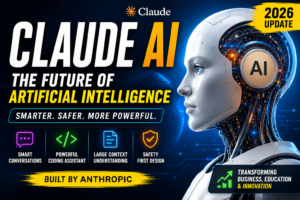
3. Claude


Claude specializes in long-form writing, document analysis, and professional communication.
Best Uses
- Reports
- Research papers
- Legal documents
- Business communication
4. Microsoft Copilot


Microsoft Copilot integrates AI into Microsoft Word, Excel, PowerPoint, Outlook, and Teams.
Features
- Document writing
- Excel formulas
- Presentation creation
- Meeting summaries
- Email drafting
5. Canva Artificial Intelligence


Canva Artificial Intelligence helps users create professional graphics without advanced design skills.
Features
- AI image generation
- Magic Design
- Background remover
- Logo creation
- Social media graphics
6. Midjourney


Midjourney creates stunning Artificial Intelligence artwork from simple text prompts.
Popular Uses
- Posters
- Digital art
- Book covers
- Website graphics
- Marketing materials
7. Adobe Firefly


Adobe Firefly enables creators to generate and edit images using Artificial Intelligence.
Features
- Text-to-image
- Generative Fill
- AI editing
- Commercial-friendly content
8. GitHub Copilot


GitHub Copilot assists developers by suggesting code, explaining functions, and reducing coding time.
Features
- Code completion
- Bug fixing
- Documentation
- Multiple programming languages
9. Notion Smart Technology


Notion AI improves organization and productivity through intelligent document creation and summarization.
Features
- Meeting notes
- Writing assistant
- Task summaries
- Brainstorming
10. Perplexity AI


Perplexity AI is an AI-powered answer engine that provides research-backed responses with citations.
Features
- AI search
- Source citations
- Research assistance
- Current information
Comparison Table
| AI Tool | Best For | Free Version |
|---|---|---|
| ChatGPT | Writing & Productivity | Yes |
| Google Gemini | Research | Yes |
| Claude | Long Documents | Yes |
| Microsoft Copilot | Office Work | Limited |
| Canva AI | Graphic Design | Yes |
| Midjourney | AI Art | No |
| Adobe Firefly | Image Editing | Limited |
| GitHub Copilot | Coding | Limited Trial |
| Notion AI | Notes & Productivity | Limited |
| Perplexity AI | Research | Yes |
Future of Artificial Intelligence
The Future of Artificial Intelligence: How Artificial Intelligence Will Shape the Next Decade
Artificial Intelligence is no longer a futuristic concept confined to science fiction. It has become a powerful force transforming industries, economies, and daily life across the globe. From virtual assistants and self-driving cars to healthcare diagnostics and creative content generation, Intelligent Systems is revolutionizing the way humans work and interact with technology.
As Intelligent Computing continues to evolve at an unprecedented pace, experts believe the next decade will bring even more groundbreaking innovations. While AI offers immense opportunities, it also presents significant challenges related to ethics, privacy, employment, and regulation. Understanding the future of Cognitive Computing is essential for businesses, governments, and individuals preparing for a rapidly changing world.
What Is Artificial Intelligence?
Artificial Intelligence refers to computer systems designed to perform tasks that normally require human intelligence. These tasks include:
- Learning from data
- Understanding language
- Recognizing images
- Solving problems
- Making decisions
- Predicting outcomes
Modern AI relies heavily on machine learning, deep learning, neural networks, and increasingly, generative AI models capable of creating text, images, videos, music, and computer code.
Why Artificial Intelligence Is Growing So Fast
Several factors have accelerated Artificial Intelligence development:
Massive Computing Power
Cloud computing and advanced graphics processors (GPUs) allow AI models to process enormous datasets faster than ever before.
Big Data
Every day, billions of people generate digital information through smartphones, social media, online shopping, healthcare systems, and connected devices. This data helps Artificial Intelligence systems improve continuously.
Better Algorithms
Researchers have developed more efficient machine learning techniques that produce highly accurate results across a wide range of applications.
Global Investment
Governments and technology companies are investing billions of dollars in Artificial Intelligence research, infrastructure, and talent, fueling rapid innovation.
Healthcare
Healthcare is expected to experience one of Artificial Intelligence’s biggest transformations.
Future Intelligent Systems applications may include:
- Earlier disease detection
- Personalized treatment plans
- Drug discovery
- Robotic surgery assistance
- Remote patient monitoring
- Faster medical imaging analysis
AI can help doctors analyze vast amounts of medical data in seconds, improving diagnosis accuracy while reducing workloads.
Education
Education is becoming increasingly personalized through Intelligent SystemsI.
Future classrooms may include:
- Intelligent tutoring systems
- Personalized learning paths
- Real-time language translation
- Automated grading
- Virtual laboratories
- AI teaching assistants
Students will receive customized lessons based on their strengths, weaknesses, and learning pace.
Business
Businesses across every industry are adopting Intelligent Systems to improve efficiency.
Future applications include:
- Customer service chatbots
- Predictive analytics
- Fraud detection
- Inventory management
- Marketing automation
- Financial forecasting
- Human resource management
Companies using Intelligent Systems effectively can reduce costs while improving customer experiences.
Transportation
Self-driving technology continues to improve.
The future may include:
- Autonomous taxis
- Smart traffic management
- Artificial Intelligence-powered logistics
- Delivery robots
- Drone transportation
- Safer road systems
AI could significantly reduce traffic accidents caused by human error.
AI and Robotics
Robotics powered by Artificial Intelligence will become more capable and affordable.
Future robots may assist in:
- Manufacturing
- Agriculture
- Warehousing
- Healthcare
- Elderly care
- Disaster response
- Household chores
Collaborative robots, or “cobots,” will increasingly work alongside humans rather than replacing them entirely.
The Rise of Generative ARTIFICIAL INTELLIGENCE
Generative Artificial Intelligence has become one of the fastest-growing areas of artificial intelligence.
It can create:
- Articles
- Images
- Videos
- Music
- Software code
- Marketing materials
- Educational content
As these systems improve, creative professionals are expected to use artificial intelligence as a powerful productivity tool rather than a complete replacement for human creativity.
AI and Jobs
One of the biggest concerns surrounding artificial intelligence is its impact on employment.
Some repetitive jobs may become automated, particularly in:
- Data entry
- Manufacturing
- Customer support
- Basic accounting
- Administrative work
However, computational intelligence is also expected to create new roles, such as
- Computational Intelligence engineers
- Prompt engineers
- Computer Intelligence ethics specialists
- Data scientists
- Machine learning researchers
- Robotics technicians
- Artificial Intelligence security experts
The future workforce will likely require continuous learning and digital skills.
Ethical Challenges
As AI becomes more powerful, ethical concerns are growing.
Important issues include:
Privacy
Intelligent Systems systems require large amounts of data, raising concerns about personal information and surveillance.
Bias
AI models can unintentionally reflect biases present in their training data, leading to unfair outcomes.
Transparency
Many Artificial Intelligence systems operate as “black boxes,” making it difficult to explain how decisions are made.
Misinformation
Generative AI can produce highly realistic fake images, videos, and audio, increasing the risk of misinformation and fraud.
Accountability
Governments and organizations are working to establish clear rules regarding responsibility for AI-generated decisions.
Artificial Intelligence and Cybersecurity
AI plays both offensive and defensive roles in cybersecurity.
Benefits include:
- Detecting cyberattacks faster
- Identifying unusual network activity
- Preventing fraud
- Automating security monitoring
However, cybercriminals may also use Artificial Intelligence to create more sophisticated phishing attacks and malware, making cybersecurity increasingly important.
Smart Cities
AI will help build smarter cities by improving:
- Traffic flow
- Public transportation
- Energy consumption
- Waste management
- Emergency response
- Water conservation
- Pollution monitoring
These technologies aim to make cities safer, cleaner, and more efficient.
Artificial Intelligence in Space Exploration
Space agencies and private companies are using AI to:
- Analyze satellite images
- Navigate spacecraft
- Detect distant planets
- Plan space missions
- Operate autonomous rovers
Future deep-space missions will rely heavily on AI for decision-making where communication delays make real-time human control impractical.
Challenges Ahead
Despite rapid progress, artificial intelligence still faces several obstacles:
- High computing costs
- Energy consumption
- Data quality issues
- Security risks
- Regulatory uncertainty
- Ethical concerns
- Public trust
Addressing these challenges will require collaboration between researchers, businesses, policymakers, and society.
The Future Outlook
Over the next decade, AI is likely to become deeply integrated into everyday life. Rather than replacing humans entirely, AI is expected to augment human capabilities by handling repetitive tasks, analyzing complex data, and supporting better decision-making.
Success in the AI era will depend on balancing innovation with responsible development. Investments in education, workforce reskilling, ethical standards, and transparent governance will be essential to ensuring AI benefits society as a whole.
Conclusion
Artificial intelligence is reshaping the world at an extraordinary pace. From healthcare and education to transportation, business, and scientific research, artificial intelligence has the potential to solve complex global challenges while improving productivity and quality of life.
The future of AI is not just about smarter machines—it is about how humanity chooses to develop, regulate, and collaborate with these technologies. If guided responsibly, AI can become one of the most transformative and beneficial innovations in human history.
Final Thoughts
AI tools are reshaping how people work, learn, and create. Choosing the right tool depends on your goals—whether it’s writing, designing, coding, or research. By combining human expertise with AI capabilities, individuals and businesses can achieve greater efficiency and innovation.