Tamarillo (Tree Tomato): Everything You Need to Know About This Superfruit
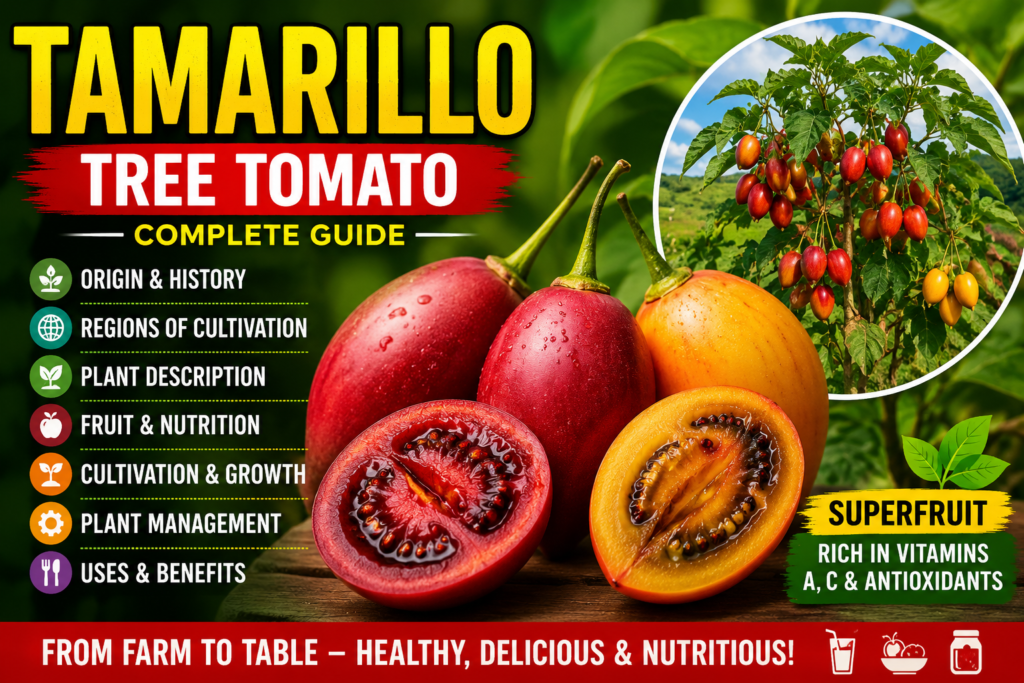
Tamarillo
Tamarillo (Tree Tomato): Origin, Cultivation, Plant Management, Uses, and Complete Guide
Tamarillo, scientifically known as Solanum betaceum, is a fast-growing fruit-bearing tree belonging to the Solanaceae (nightshade) family, which also includes tomatoes, potatoes, eggplants, and peppers. Commonly called the tree tomato, the tamarillo is prized for its vibrant colors, tangy-sweet flavor, and excellent nutritional value.
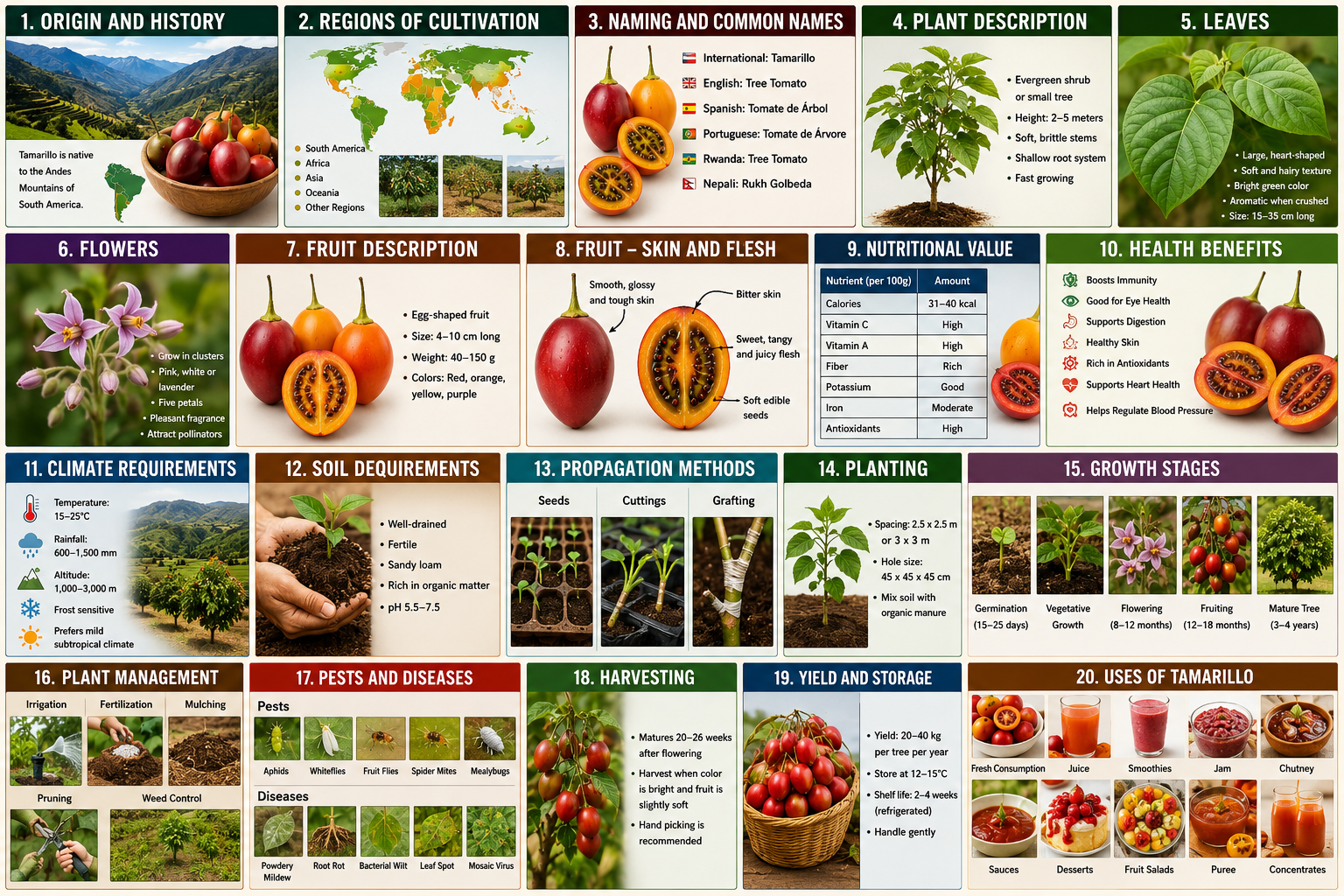
Native to the Andes Mountains of South America, tamarillo has become a commercially important fruit in many tropical and subtropical countries. It is widely cultivated in New Zealand, Rwanda, Kenya, Colombia, Ecuador, Peru, Nepal, India, and Australia, where it is consumed fresh; processed into juices, sauces, jams, and desserts; and valued for its rich vitamin and antioxidant content.
Today, tamarillo is gaining popularity worldwide as a superfruit due to its impressive nutritional profile and versatility in culinary applications.
Scientific Classification
| Category | Classification |
|---|---|
| Kingdom | Plantae |
| Division | Angiosperms |
| Class | Eudicots |
| Order | Solanales |
| Family | Solanaceae |
| Genus | Solanum |
| Species | Solanum betaceum |
Origin and History
Tamarillo originated in the Andean highlands of South America, particularly in modern-day:
- Peru
- Ecuador
- Colombia
- Bolivia
- Northern Chile
Archaeological evidence suggests indigenous civilizations cultivated tamarillo for centuries before European explorers arrived.
During the 19th century, the fruit spread to various subtropical regions around the world. It gained commercial importance in New Zealand, where growers successfully improved varieties and popularized the name “Tamarillo.”
Before 1967, the fruit was commonly known as Tree Tomato. However, New Zealand growers officially adopted the name Tamarillo to distinguish it from ordinary tomatoes and improve its market appeal internationally.
Regions of Cultivation
Today tamarillo is cultivated in more than 30 countries.
Major producing countries include:
South America
- Colombia
- Ecuador
- Peru
- Bolivia
- Chile
Africa
- Rwanda
- Kenya
- Uganda
- South Africa
- Tanzania
Asia
- Nepal
- India
- Bhutan
- Sri Lanka
Oceania
- New Zealand
- Australia
Other Regions
- Portugal
- Spain
- California (USA)
- Hawaii
Tamarillo grows best in mountainous tropical regions with mild temperatures.
Naming and Common Names
The fruit is known by different names across the world.
| Country | Common Name |
|---|---|
| International | Tamarillo |
| English | Tree Tomato |
| Spanish | Tomate de Árbol |
| Portuguese | Tomate de Árvore |
| Rwanda | Tree Tomato |
| Nepal | Rukh Golbeda |
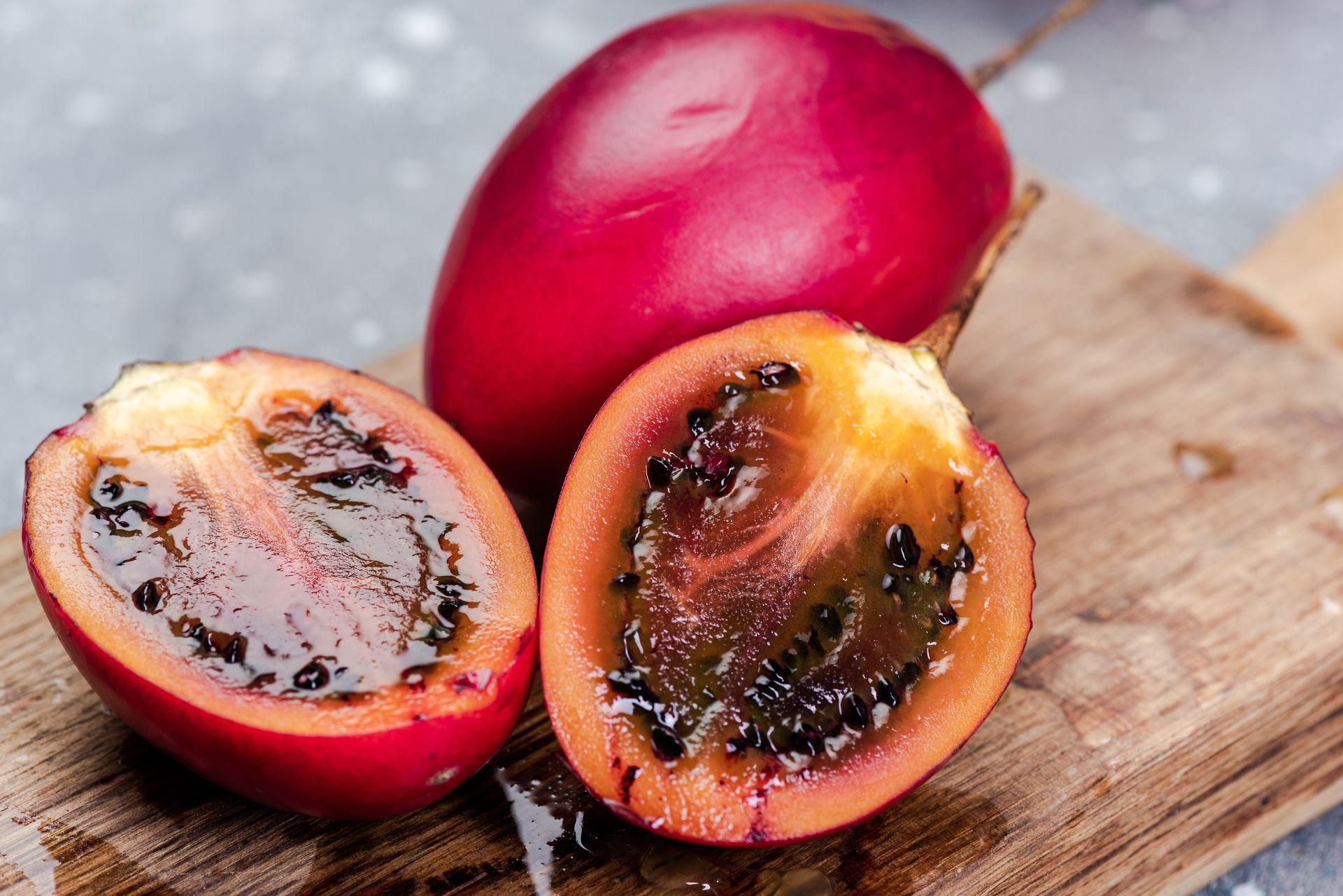
The word “Tamarillo” combines “tama” (chosen for its pleasant sound) with the Spanish diminutive suffix “-illo.”
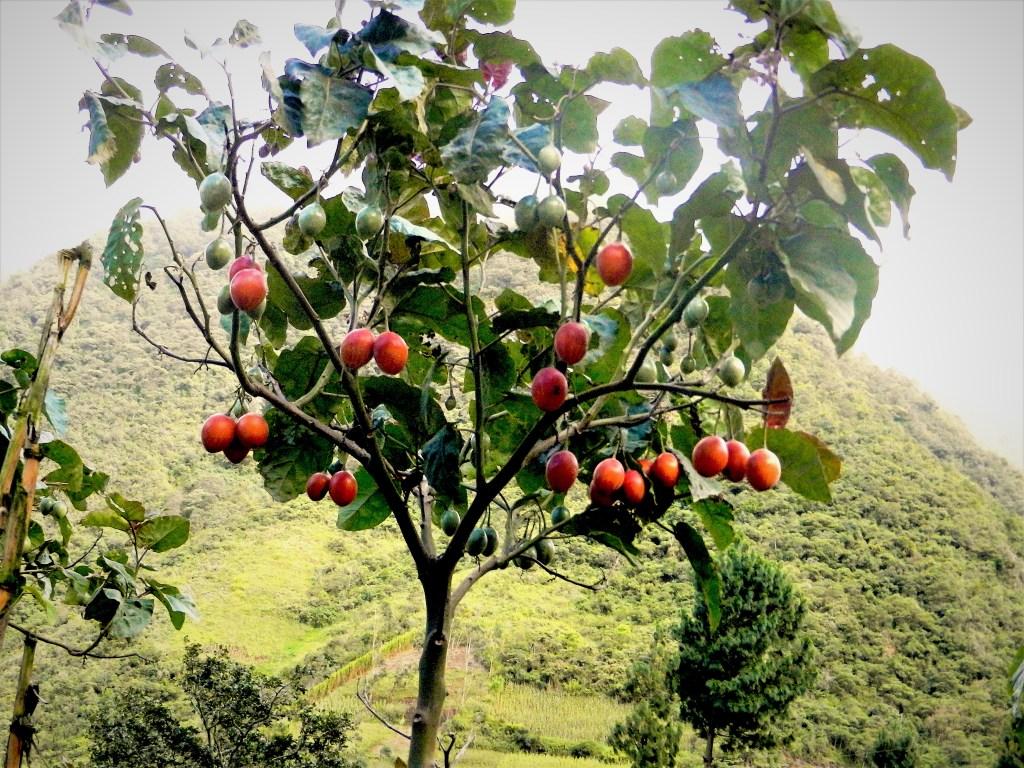
Plant Description
Tamarillo is a small evergreen tree.
Height
Normally reaches:
- 2–5 meters
- Occasionally up to 6 meters
Stem
- Soft and brittle
- Green when young
- Becomes woody with age
Root System
- Shallow
- Sensitive to drought
- Easily damaged by cultivation
Branches
- Numerous
- Brittle
- Spread outward farming an umbrella-shaped canopy
Leaves
The leaves are:
- Large
- Heart-shaped
- Bright green
- Soft and hairy
- 15–35 cm long
They emit a characteristic aroma when crushed.
Flowers
Flowers appear in clusters.
Characteristics:
- Pink
- White
- Lavender
- Five petals
- Pleasant fragrance
Flowering usually begins within the first year after planting.
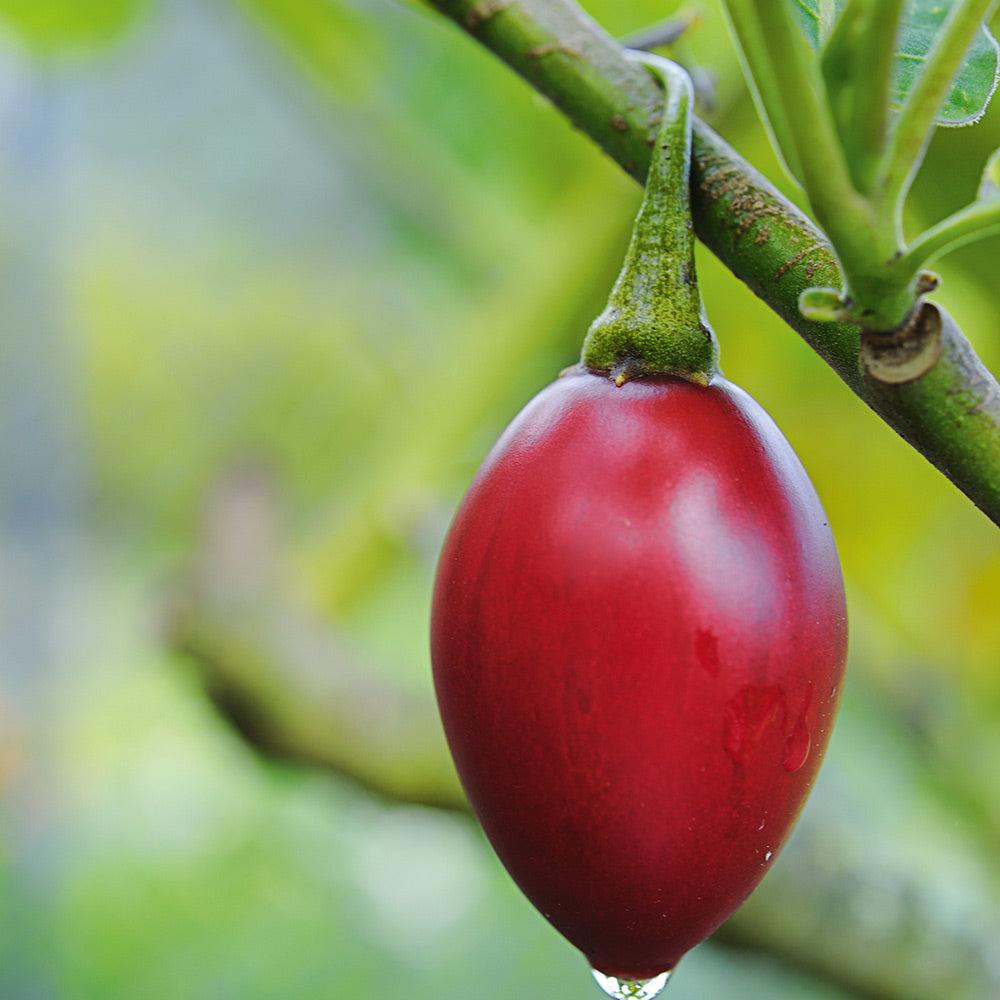
Fruit Description
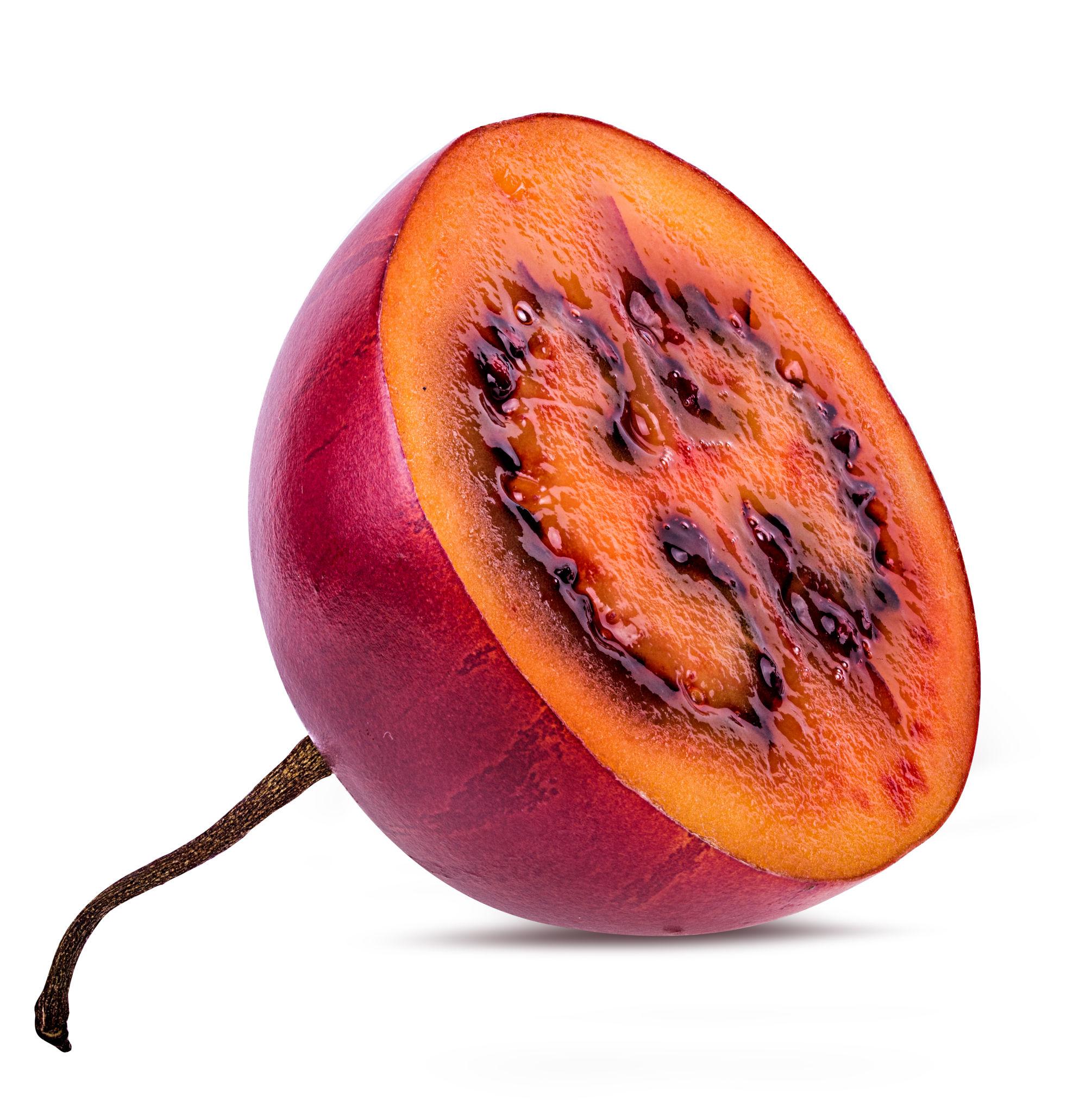
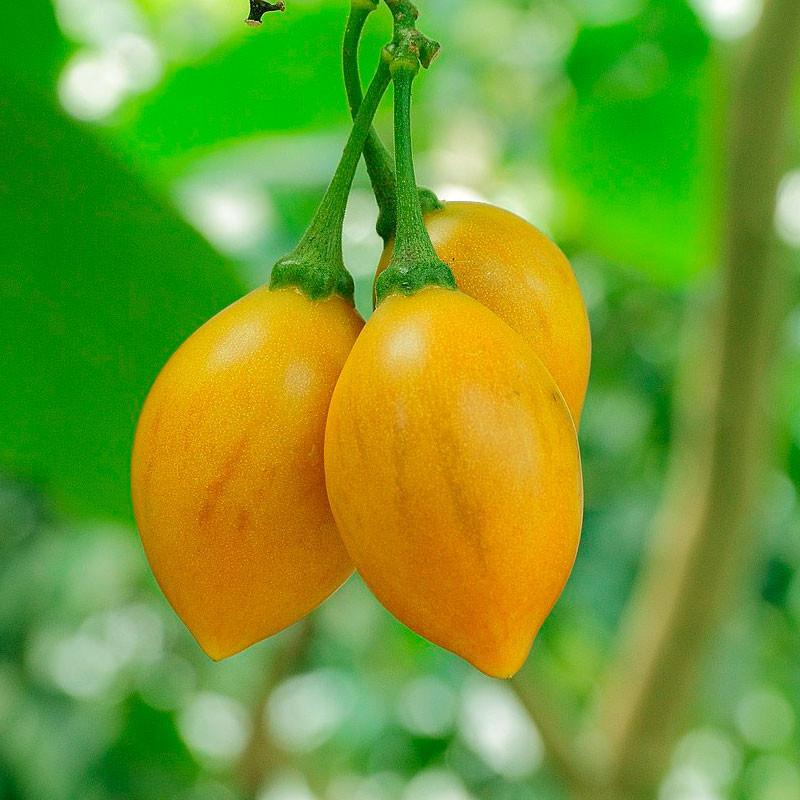
The fruit is egg-shaped.
Size:
- 4–10 cm long
- 3–5 cm wide
Weight:
40–150 grams
Colors include:
- Red
- Orange
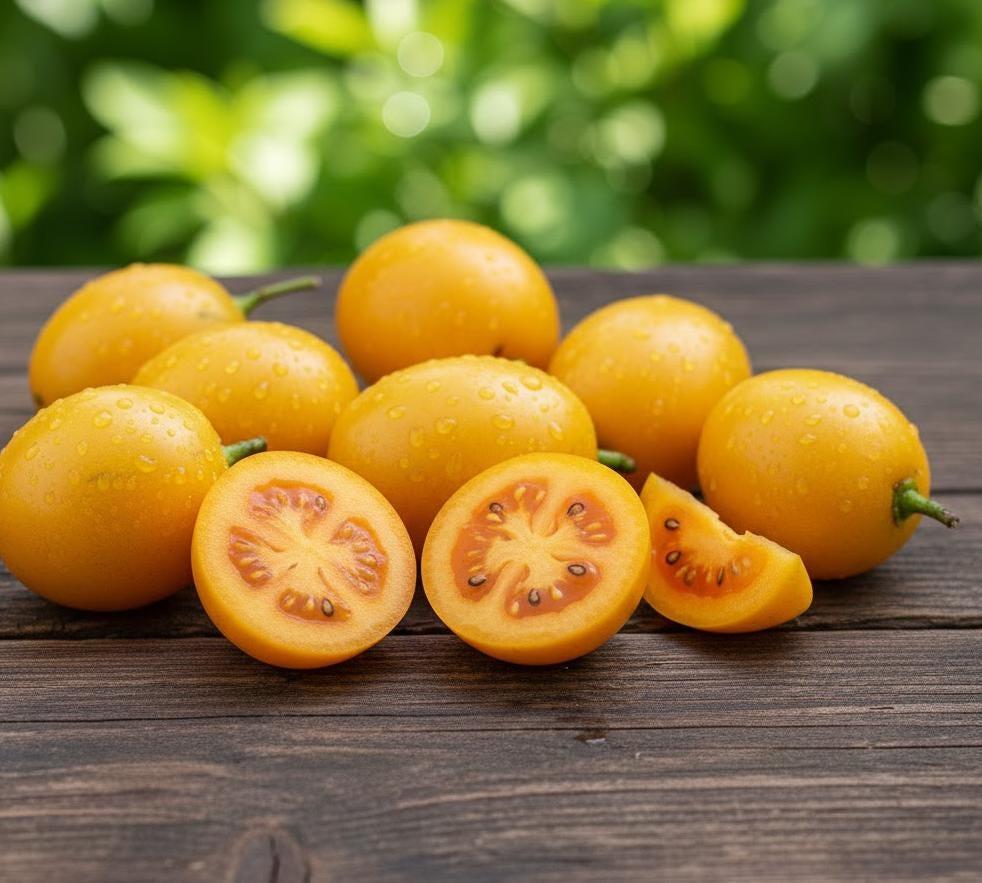
- Yellow
- Purple
Skin
The skin is:
- Smooth
- Tough
- Glossy
- Slightly bitter
Most people peel or scoop out the flesh instead of eating the skin.
Flesh
The inside contains:
- Juicy pulp
- Soft edible seeds
- Orange to deep red flesh
Taste ranges from:
- Sweet
- Tangy
- Slightly acidic
Red varieties are generally more tart, while yellow and orange types are sweeter.
Nutritional Value
Per 100 grams:
| Nutrient | Amount |
|---|---|
| Calories | 31–40 kcal |
| Vitamin C | High |
| Vitamin A | High |
| Fiber | Rich |
| Potassium | Good |
| Iron | Moderate |
| Antioxidants | High |
Health Benefits
Regular consumption may help:
- Strengthen immunity
- Improve eye health
- Promote healthy skin
- Support digestion
- Protect cells from oxidative stress
- Maintain heart health
- Support healthy blood pressure due to potassium content
Climate Requirements
Ideal conditions include:
Temperature:
15–25°C
Rainfall:
600–1,500 mm annually
Altitude:
1,000–3,000 meters above sea level
The tree dislikes:
- Frost
- Waterlogging
- Strong winds
- Extreme heat
Soil Requirements
Best soil:
- Fertile
- Well-drained
- Sandy loam
- Rich in organic matter
Preferred pH: – 5.5–7.5
Propagation
Tamarillo can be propagated through the following:
Seeds
Advantages:
- Easy
- Cheap
Disadvantages:
- Variation among plants
Cuttings
Most commercial growers prefer cuttings because the following are true:
- Plants bear fruit earlier
- Better uniformity
- Higher productivity
Grafting
Used in commercial nurseries to improve disease resistance and fruit quality.
Planting
Spacing:
2.5 × 2.5 meters
or
3 × 3 meters
Planting holes:
45 × 45 × 45 cm
Organic manure is usually mixed with soil before planting.
Growth Stages
Germination
Seeds germinate within:
15–25 days
Vegetative Growth
Rapid branch development occurs during the first year.
Flowering
Usually starts:
8–12 months after planting.
Fruiting
Commercial production begins:
12–18 months
Peak production occurs after:
3–4 years.
Plant Management
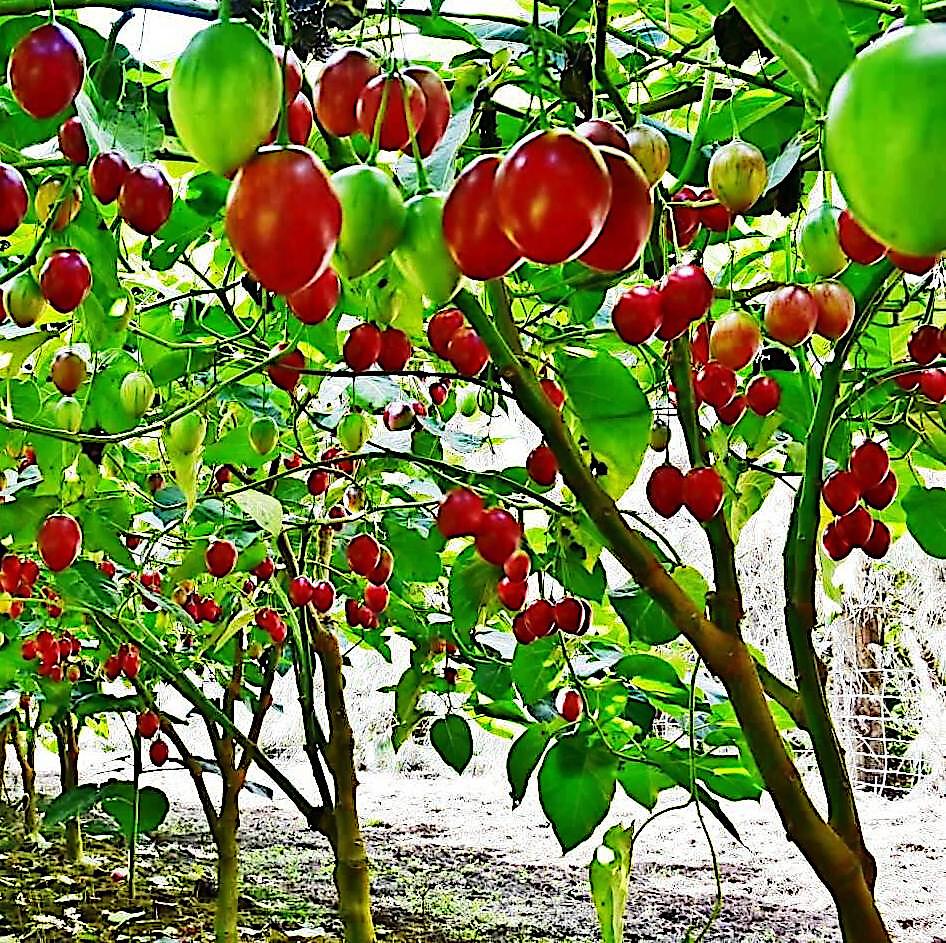
Proper management is essential for high yields.
Irrigation
Water regularly during dry periods.
Avoid overwatering.
Fertilization
Recommended nutrients include:
- Nitrogen
- Phosphorus
- Potassium
- Organic compost
Balanced fertilization improves fruit size and yield.
Mulching
Benefits:
- Conserves moisture
- Controls weeds
- Improves soil health
Pruning
Annual pruning helps:
- Improve sunlight penetration
- Remove diseased branches
- Encourage new growth
- Increase fruit production
Weed Control
Weeds compete for nutrients and water.
Methods include:
- Manual weeding
- Mulching
- Cover crops
Pests
Common pests include:
- Aphids
- Whiteflies
- Fruit flies
- Spider mites
- Mealybugs
Integrated Pest Management (IPM) is recommended to minimize chemical use.
Diseases
Major diseases:
- Powdery mildew
- Root rot
- Bacterial wilt
- Leaf spot
- Mosaic virus
Preventive measures include:
- Proper drainage
- Disease-free seedlings
- Crop sanitation
- Timely pruning
Harvesting
Fruit matures:
20–26 weeks after flowering.
Harvest indicators:
- Bright skin color
- Slight softness
- Full fruit size
Harvesting is usually done by hand.
Yield
A healthy tree produces:
20–40 kg annually.
Commercial orchards can produce several tonnes per hectare under good management.
Storage
Fresh fruits remain marketable for:
- 2–4 weeks under refrigeration
- 5–7 days at room temperature
Uses of Tamarillo
Fresh Consumption
The fruit is cut in half and eaten with a spoon.
Juice
Tree tomato juice is especially popular in Rwanda, Kenya, and Colombia.
Smoothies
Blended with:
- Banana
- Mango
- Pineapple
- Yogurt
Jam
Excellent for making preserves.
Chutney
Often served with grilled meats.
Sauces
Used in gourmet cooking because of its sweet-acidic flavor.
Desserts
Included in:
- Ice cream
- Cakes
- Fruit salads
- Sorbets
Commercial Processing
Processed into:
- Purees
- Concentrates
- Syrups
- Frozen pulp
Economic Importance
Tamarillo has become an important cash crop in many countries due to:
- High market demand
- Early fruiting
- Attractive export potential
- Value-added processing opportunities
- Growing popularity as a health food
For many smallholder farmers, particularly in East Africa and the Andes, tamarillo cultivation provides a valuable source of income.
Environmental Importance
Tamarillo trees contribute to sustainable farming by:
- Helping reduce soil erosion on sloping land through their root systems.
- Supporting biodiversity by providing flowers that attract pollinators such as bees.
- Integrating well into agroforestry systems alongside coffee, bananas, and other crops.
Tamarillo, or the Tree Tomato, is a remarkable fruit crop that combines nutritional value, commercial potential, and adaptability to a wide range of tropical highland environments. Originating in the Andes and now cultivated across South America, Africa, Asia, and Oceania, it has earned a place in both local diets and international markets.
Its fast growth, relatively early fruit production, and versatility make it an attractive option for farmers, while its rich supply of vitamins, antioxidants, and fiber appeals to health-conscious consumers. Whether eaten fresh, juiced, or processed into sauces and jams, tamarillo continues to gain recognition as a valuable fruit for sustainable agriculture and healthy living.






1 thought on “Tamarillo (Tree Tomato): Everything You Need to Know About This Superfruit”