Israel Carries Out Airstrikes in Lebanon as Iran Claims U.S. Deal Is Near Middle East Tensions Rise
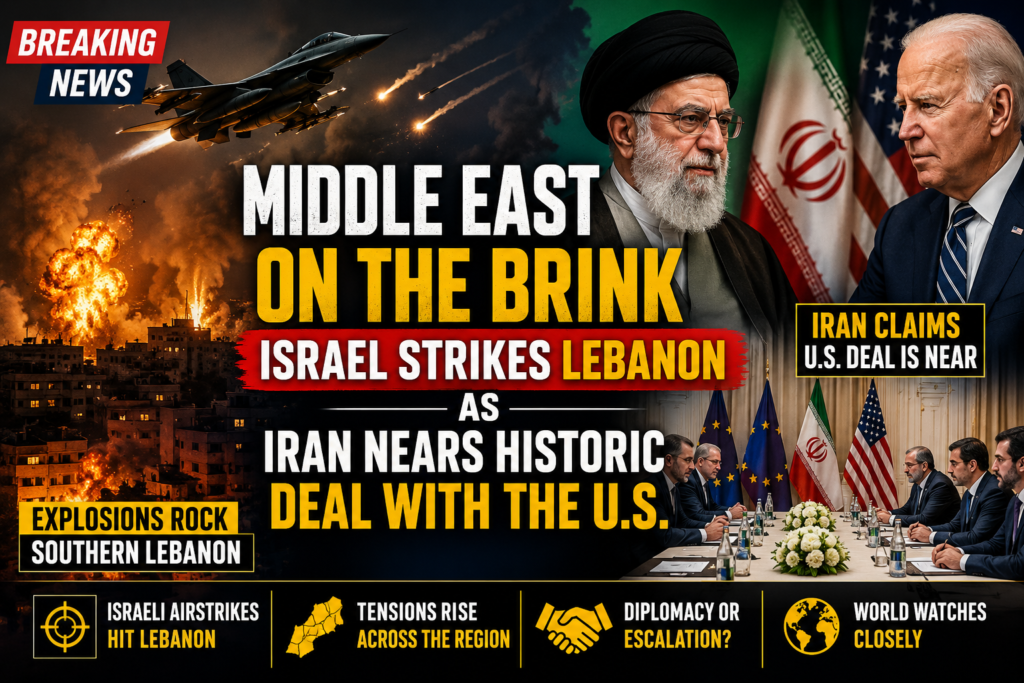
Middle East Tensions Rise as Israel Strikes Lebanon and Iran Signals Progress in U.S. Talks

The Middle East is once again at the center of global attention after reports emerged that Israel carried out air strikes on southern Lebanon while Iran claimed progress in negotiations with the United States over a potential diplomatic agreement. The developments, unfolding within hours of each other, have heightened concerns about regional stability while also raising cautious hopes for renewed diplomacy.
Israel Launches Air Strikes in Lebanon
According to Lebanese state media, Israeli aircraft conducted multiple strikes in southern Lebanon late Friday night. Explosions were reported near border towns, and residents described hearing drones and fighter jets overhead before the blasts. Lebanese authorities said emergency teams were deployed to assess the damage and assist civilians in affected areas.
The Israeli military did not immediately provide full details of the operation, but officials have previously stated that strikes in Lebanon are aimed at preventing attacks by armed groups operating near the border, particularly Hezbollah. Israel has repeatedly accused Hezbollah of increasing military activity along the frontier and launching projectiles into Israeli territory.

A Fragile Border
The Israel-Lebanon border has remained tense since the Gaza conflict intensified in 2023. Although large-scale war has been avoided, near-daily exchanges of fire, drone attacks, and artillery shelling have kept the region on edge. Analysts warn that any major escalation could quickly draw in multiple regional actors and destabilize the wider Middle East.
Lebanese officials condemned the strikes as a violation of sovereignty, while international observers urged restraint from both sides. The United Nations Interim Force in Lebanon (UNIFIL), which monitors the border area, has repeatedly called for de-escalation and adherence to existing ceasefire arrangements.
Iran Says Nuclear Deal with U.S. Is Near
At the same time, Iranian officials signaled that negotiations with the United States over a possible agreement on Iran’s nuclear program were approaching a breakthrough. A senior Iranian diplomat reportedly said that the two sides were “closer than ever” to reaching an understanding that could ease sanctions in exchange for limits on nuclear activities.
The comments came after months of indirect talks mediated by regional and international partners. While no official agreement has been announced, the statement from Tehran boosted speculation that diplomacy between Iran and the U.S. may be regaining momentum after years of stalled negotiations.

What the Talks Involve
The negotiations are believed to focus on several key issues:
- Limits on uranium enrichment by Iran.
- International monitoring of Iranian nuclear facilities.
- Gradual relief from U.S. economic sanctions.
- Measures to reduce regional tensions and prevent further escalation in the Gulf and Levant.
Washington has not confirmed that a deal is imminent, but U.S. officials have acknowledged ongoing diplomatic contacts. A State Department spokesperson said the United States remains committed to preventing Iran from obtaining a nuclear weapon through diplomatic means if possible.
Why These Developments Matter Together
The timing of the Israeli strikes and Iran’s diplomatic claims is significant. Israel has long opposed any agreement it believes would allow Iran to maintain a substantial nuclear program, arguing that Tehran’s regional influence and support for groups such as Hezbollah pose a direct threat to Israeli security.
For Israel, military pressure on Hezbollah in Lebanon is closely linked to concerns about Iran’s broader regional network. For Iran, progress in talks with the U.S. could strengthen its economic position and reduce international isolation, even as it continues to back allied groups across the region.

Regional and Global Reactions
International reactions were swift:
- United States: Called for restraint along the Israel-Lebanon border while emphasizing support for Israel’s security.
- European Union: Urged all parties to avoid escalation and encouraged continued diplomacy with Iran.
- Gulf States: Expressed concern over regional instability but welcomed signs of diplomatic progress between Tehran and Washington.
- United Nations: Reiterated appeals for de-escalation in Lebanon and constructive engagement in nuclear negotiations.
Energy markets also reacted cautiously, with oil prices fluctuating amid fears that wider conflict could disrupt supplies from the Middle East.
Could Diplomacy Reduce Tensions?
Some analysts argue that a successful U.S.-Iran agreement could eventually help reduce regional tensions by reopening channels of communication and lowering the risk of direct confrontation. Others are more skeptical, noting that conflicts involving Israel, Hezbollah, and other regional groups are driven by broader geopolitical rivalries that may not disappear even if a nuclear deal is reached.
Challenges Ahead
Several obstacles remain before any agreement can be finalized:
- Political opposition in Washington and Tehran, where hardline factions distrust compromise.
- Israel’s security concerns, which could intensify if it believes diplomacy is not adequately addressing Iran’s regional activities.
- Verification and implementation issues, including how sanctions relief would be phased and monitored.
- Ongoing regional conflicts, especially in Lebanon, Gaza, Syria, and the Red Sea, which could derail diplomatic momentum.
Voices from the Region
Residents in southern Lebanon described a night of fear and uncertainty. “We heard explosions after midnight and didn’t know whether it would continue,” one local resident told regional media. In Israel, communities near the northern border have also faced repeated security alerts in recent months, with many residents living under the threat of rocket fire.
Meanwhile, Iranian media portrayed the nuclear talks as a sign that Western powers are recognizing the need for diplomacy. Some Iranian commentators suggested that sanctions relief could help stabilize the country’s economy, which has been under severe pressure for years.
The Bigger Picture
The Middle East is currently shaped by two competing forces: military escalation and diplomatic negotiation. The Israeli strikes in Lebanon highlight how quickly security tensions can flare, while Iran’s claims about a near-deal with the U.S. suggest that backchannel diplomacy is still active despite deep mistrust.
History shows that these two dynamics often unfold simultaneously in the region. Military pressure can influence negotiations, while diplomatic progress can sometimes reduce the likelihood of wider war. But the balance is fragile, and a single major incident could shift the situation dramatically.
The latest developments underscore the complexity of Middle Eastern politics in 2026. Israel’s reported air strikes on Lebanon reflect ongoing security concerns along its northern border, while Iran’s assertion that a deal with the United States is near points to a possible diplomatic opening on the nuclear issue.
Whether the region moves toward escalation or cautious stabilization will depend on the actions of multiple actors in the coming days: Israel, Hezbollah, Iran, the United States, and international mediators. For now, the world is watching closely as diplomacy and conflict continue to unfold side by side.





1 thought on “Israel Carries Out Airstrikes in Lebanon as Iran Claims U.S. Deal Is Near Middle East Tensions Rise”